
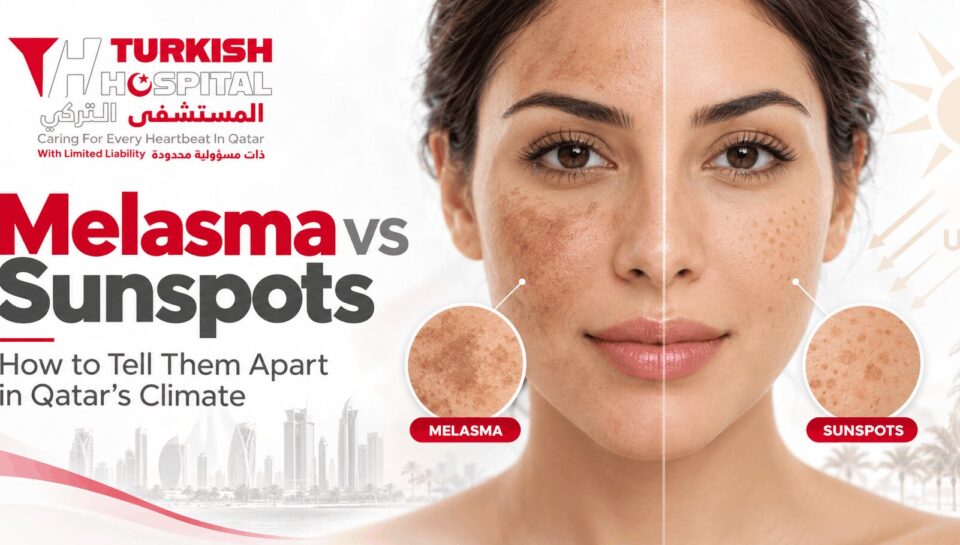
Have you noticed brown patches on your cheeks, forehead, or upper lip? Perhaps the spots become darker after spending time outdoors in Doha. You may wonder whether you have melasma, sunspots, or another type of skin pigmentation.
Although melasma and sunspots can look similar, they are different skin conditions with different causes and patterns.
Understanding melasma vs sunspots can help you recognize possible triggers, protect your skin, and know when to seek professional advice.
This guide explains the differences between melasma and sunspots, their common symptoms, how dermatologists assess them, and practical ways to protect your skin.
Melasma vs Sunspots: What Is the Main Difference?
The main difference between melasma and sunspots is their appearance, distribution, and underlying triggers. Melasma commonly causes broader patches of pigmentation, while sunspots tend to form individual, more clearly defined marks.
Both conditions involve melanin, the natural pigment responsible for skin colour. However, melanin production and distribution can be affected by different factors.
Melasma vs Sunspots Comparison Table
Feature | Melasma | Sunspots |
Appearance | Larger, irregular brown or grey-brown patches | Distinct, flat tan-to-brown marks |
Common locations | Cheeks, forehead, upper lip, nose | Face, hands, shoulders, arms |
Pattern | Often symmetrical across both sides of the face | Individual or grouped spots |
Common triggers | Sun exposure, hormonal changes, genetic susceptibility | Cumulative UV exposure |
Who can develop it? | Any gender; more common in women | Commonly adults with repeated sun exposure |
Typical symptoms | Usually no pain or itching | Usually no pain or itching |
Course over time | May fade, persist, or return | Often remains visible without treatment |
Assessment | Clinical examination, sometimes additional tools | Clinical examination, sometimes dermoscopy |
These features are useful clues, but they cannot confirm a diagnosis. Some people may have both melasma and sunspots, and other skin conditions can resemble either one.
What Is Melasma and What Does It Look Like?
Melasma is a common pigmentation condition that causes darker patches, usually on the face. These patches often develop gradually and can become more noticeable following sun exposure.
Melasma occurs when pigment-producing cells, called melanocytes, become more active and produce excess melanin in affected areas.
Common Melasma Symptoms
Melasma symptoms usually involve changes in skin colour rather than physical discomfort.
Common signs include:
- Light brown, dark brown, or grey-brown patches.
- Irregular areas of pigmentation rather than isolated round spots.
- Similar patches appearing on both cheeks.
- Darkening across the forehead, nose, or upper lip.
- Pigmentation that becomes more noticeable following sun exposure.
Melasma usually does not cause itching, pain, or raised bumps.
A person may notice that their skin feels completely normal even though its colour has changed.
Where Does Melasma Usually Appear?
Melasma most commonly affects the face, especially:
- Cheeks
- Forehead
- Bridge of the nose
- Upper lip
- Chin and jawline
Melasma can occasionally affect other areas exposed to sunlight, such as the arms.
A common characteristic is facial symmetry. For example, someone may notice similar brown patches on both cheeks.
However, symmetrical pigmentation is not enough to diagnose melasma without a proper examination.
What Causes Melasma?
Melasma has several contributing factors. The exact cause is not fully understood, and more than one trigger may be involved.
Common melasma triggers include:
Sun exposure: Ultraviolet radiation can stimulate pigment production and make existing melasma more visible.
Hormonal changes: Melasma may develop during pregnancy or in association with hormonal medications, including certain contraceptives.
Genetic susceptibility: People with a family history of melasma may be more likely to develop it.
Skin type: Melasma is frequently observed in people with skin that tans easily, although it can occur across different skin tones.
Certain medications: Some medicines may contribute to pigmentation changes or increase sensitivity to sunlight.
Melasma is sometimes called the mask of pregnancy because it can develop during pregnancy. However, not every pregnant person develops melasma, and men can develop the condition too.
The American Academy of Dermatology explains that hormonal influences and sunlight are among the recognized factors associated with melasma.
What Are Sunspots on the Face?
Sunspots are flat areas of increased pigmentation that develop mainly after repeated exposure to ultraviolet radiation. Their medical name is solar lentigines.
Sunspots are also commonly called age spots or liver spots, although they are not caused by problems with the liver.
Unlike melasma, sunspots generally appear as separate, more clearly defined marks.
What Do Sunspots Look Like?
Typical sunspots may have the following characteristics:
- Flat, round, oval, or somewhat irregular shape.
- Tan, brown, or darker pigmentation.
- Relatively distinct edges.
- One spot or several separate marks.
- Little or no discomfort.
Sunspots vary in size and may appear individually or in groups.
Although a typical sunspot is benign, you should not assume that every dark spot is harmless based on its appearance.
Where Do Sunspots Commonly Develop?
Sunspots usually appear on areas that receive frequent sunlight, including the:
- Face
- Forehead
- Cheeks
- Back of the hands
- Forearms
- Shoulders
They become more common with age because UV exposure accumulates over time.
However, people who experience frequent outdoor sun exposure may notice pigmentation changes earlier.
According to DermNet’s solar lentigo guidance, solar lentigines are common benign pigmented lesions linked to chronic UV exposure.
How Does Qatar’s Climate Affect Melasma and Sunspots?
Sun exposure in Qatar can contribute to sunspots and make existing melasma more noticeable. The important factor is exposure to sunlight and UV radiation, rather than simply living in a hot climate.
Residents of Doha may spend time outdoors while commuting, walking, visiting beaches, or participating in outdoor activities.
Even brief periods of repeated sun exposure can add up over months and years.
Can Qatar’s Strong Sun Make Melasma Worse?
Yes. Sunlight is a well-recognized trigger for melasma.
When UV radiation reaches the skin, it can stimulate melanin production. In people with melasma, this process may contribute to darker or more persistent patches.
Visible light from the sun can also worsen melasma, particularly in people with darker skin tones.
This means preventing pigmentation involves more than avoiding sunburn.
Regular sun protection remains important even when your skin does not turn red or feel uncomfortable.
Can Hot Weather Make Melasma Worse?
Heat may contribute to worsening pigmentation in some individuals, but melasma is not simply caused by high temperatures.
Sunlight, hormones, skin biology, and genetic susceptibility are better-established influences.
In Qatar, hot weather may also lead to sweating and more frequent wiping of the face. This can affect how well sunscreen remains on the skin.
It is therefore important to reapply sunscreen when appropriate, especially after heavy sweating or towel drying.
Does Sun Damage Happen Only During Summer in Qatar?
No. Sun-related skin damage is not limited to summer.
Although outdoor conditions change throughout the year, UV exposure can still occur during cooler months.
People living in Doha should maintain a sun-protection routine throughout the year instead of using sunscreen only during extremely hot weather.
Hamad Medical Corporation’s guidance recommends protective clothing, shade, and broad-spectrum sunscreen with SPF 30 or higher.
How Can You Tell Melasma From Sunspots at Home?
You may notice certain patterns that suggest melasma or sunspots, but appearance alone cannot provide a reliable diagnosis. A dermatologist can examine the skin and decide whether further assessment is necessary.
The following observations may help you describe your concerns during an appointment.
1. Look at the Shape of the Pigmentation
Melasma often appears as broader, irregular patches.
Sunspots are more often individual, flat marks with relatively clear boundaries.
A larger pigmented area is not automatically melasma, and smaller spots are not always sunspots.
2. Check Whether Both Sides of Your Face Are Affected
Melasma frequently develops symmetrically.
For example, patches may appear on both cheeks or across the forehead.
Sunspots may appear in scattered locations without forming the same symmetrical pattern.
3. Think About When the Dark Spots Appeared
Melasma may begin or become more noticeable during periods of hormonal change.
Sunspots tend to develop gradually after cumulative sun exposure.
If pigmentation appeared after acne, irritation, or a cosmetic procedure, another condition may be responsible.
4. Observe Whether Sun Exposure Changes the Pigmentation
Both melasma and sunspots may darken with sun exposure.
Melasma, however, may fluctuate considerably and can recur even after successful treatment.
You may notice that pigmentation becomes more visible during periods with greater outdoor sun exposure.
5. Look for Other Skin Changes
Typical melasma and sunspots do not usually cause pain, bleeding, or persistent inflammation.
A spot that changes shape, develops several colours, bleeds, or looks very different from surrounding spots needs medical assessment.
Remember: These observations are not a substitute for diagnosis. Avoid using skin-lightening products, acids, or cosmetic procedures on an unexplained lesion before it has been assessed.
Could Dark Spots on Your Face Be Something Else?
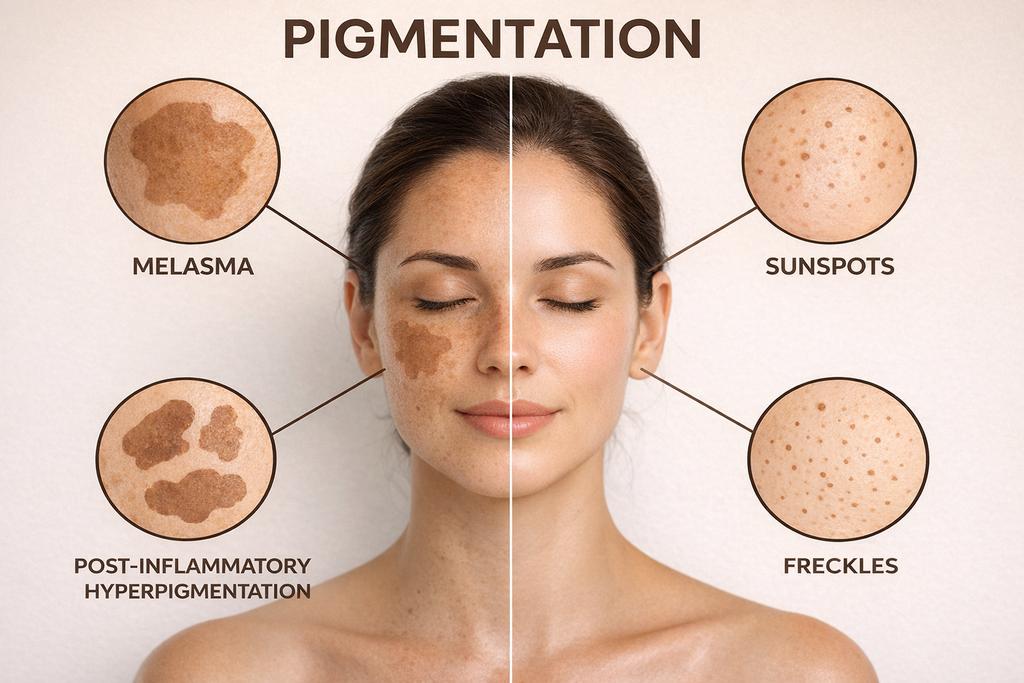
Not every brown mark is melasma or a sunspot. Several other pigmentation conditions can produce similar changes in facial skin.
Understanding different types of facial pigmentation helps explain why accurate diagnosis matters.
Melasma vs Freckles
Freckles are usually small, flat pigmented spots that often develop in childhood and may become more visible after sunlight exposure.
They can fade during periods of reduced sun exposure.
Melasma usually forms larger areas of pigmentation and is more commonly associated with hormonal and environmental triggers.
Post-Inflammatory Hyperpigmentation
Post-inflammatory hyperpigmentation (PIH) develops after skin inflammation or injury.
For example, dark marks may remain following:
- Acne
- Eczema
- Skin irritation
- Burns
- Certain cosmetic procedures
These spots often appear in the same areas where inflammation occurred.
People sometimes confuse acne-related pigmentation with melasma or sun damage.
Other Pigmented Skin Lesions
Some moles and other skin lesions may resemble ordinary pigmentation.
Certain skin cancers can also present as pigmented marks, which is why unusual or changing spots should not be treated as a cosmetic concern without examination.
A dermatologist may recommend closer assessment of any lesion that appears suspicious.
Can Melasma and Sunspots Be Treated the Same Way?
Melasma and sunspots require different management approaches because they do not develop in exactly the same way. Although both involve pigmentation, treatment depends on the diagnosis, skin type, medical history, and expected benefits and risks.
How Is Melasma Usually Managed?
Managing melasma generally involves limiting triggers and reducing excessive pigmentation.
A dermatologist may consider:
- Consistent sun protection.
- Suitable prescription topical medications.
- Gentle skincare.
- Review of possible contributing factors.
- Carefully selected procedures in appropriate cases.
Prescription treatments may include medications such as azelaic acid or hydroquinone-based formulations, depending on individual circumstances.
These products should be used under appropriate medical guidance, especially during pregnancy or when planning pregnancy.
Melasma can improve, but it may persist or return. Long-term sun protection is often needed to maintain results.
How Are Sunspots Usually Managed?
Sunspots are benign and do not always require treatment.
If the diagnosis is confirmed and a patient wants to reduce their appearance, a dermatologist may discuss appropriate options based on skin type and the characteristics of the lesion.
Treatment may involve selected topical products or procedures.
However, any lesion that is suspicious for skin cancer must be assessed before cosmetic removal is considered.
Are Chemical Peels and Laser Treatments Suitable for Everyone?
No. Chemical peels and laser procedures are not suitable for every pigmentation problem or every skin type.
Some procedures can cause irritation, inflammation, or additional pigmentation, particularly when treatment is not carefully selected.
For melasma, procedures may also be associated with relapse or worsening pigmentation in some patients.
International expert guidance emphasizes daily sun protection and medically supervised treatment, with procedural options used selectively.
A dermatologist should explain the likely benefits, limitations, and risks before recommending a treatment.
You can learn more about the hospital’s medical skin assessment services on our Dermatology Clinic.
How Can You Protect Your Skin From Pigmentation in Qatar?
Daily sun protection is one of the most important steps for reducing UV-related skin damage and limiting worsening melasma. It is especially relevant for people who spend time outdoors in Doha.
1. Use Broad-Spectrum Sunscreen Every Day
Choose a sunscreen that provides:
- SPF 30 or higher.
- Broad-spectrum protection against UVA and UVB radiation.
- Water resistance when spending time outdoors or sweating.
Apply sunscreen generously to exposed skin before going outdoors.
Reapply approximately every two hours while outdoors and after swimming or heavy sweating, according to product instructions.
2. Consider Tinted Sunscreen for Melasma
For people with melasma, tinted sunscreen containing iron oxides may provide additional protection against visible light.
Visible light can contribute to worsening pigmentation, especially in darker skin tones.
The American Academy of Dermatology recommends tinted sunscreen containing iron oxides as part of melasma self-care.
3. Seek Shade During Strong Sunlight
Plan outdoor activities to reduce unnecessary exposure during periods of intense sunshine.
Whenever possible:
- Walk in shaded areas.
- Use a wide-brimmed hat.
- Wear sunglasses with UV protection.
- Consider sun-protective clothing.
- Avoid unnecessary tanning.
Hamad Medical Corporation advises limiting exposure around the middle of the day, particularly between 11 a.m. and 3 p.m.
4. Use Gentle Skincare Products
Skincare products that repeatedly irritate the skin may worsen pigmentation.
Choose products suited to your skin type and avoid combining multiple strong active ingredients without professional advice.
If a product causes persistent burning, redness, or irritation, stop using it and seek guidance.
5. Avoid Unsupervised Skin-Lightening Treatments
Not every pigmentation product is appropriate for melasma, sunspots, or post-inflammatory hyperpigmentation.
Strong bleaching products, unregulated mixtures, and aggressive home treatments can cause unwanted skin reactions.
People who are pregnant, breastfeeding, or managing another skin condition should discuss pigmentation products with a healthcare professional.
6. Monitor Changes in Your Skin
Pay attention to new or changing pigmented spots.
If a lesion grows, changes colour, bleeds, develops an unusual border, or looks different from your other spots, arrange a medical examination.
When Should You Visit Turkish Hospital Qatar in Doha for Dark Spots?
You should consider a dermatology assessment if facial pigmentation persists, its cause is unclear, or a spot is changing. A professional examination can help distinguish common pigmentation conditions from other skin concerns.
Consider booking a consultation if:
- Brown patches on your face are becoming more noticeable.
- You cannot tell whether you have melasma or sunspots.
- Pigmentation develops after acne, irritation, or treatment.
- You want advice about safe skincare during pregnancy.
- You are considering laser therapy or a chemical peel.
- A pigmented lesion is new, changing, irregular, or bleeding.
New or changing lesions should be assessed promptly rather than waiting for a routine cosmetic appointment.
At Turkish Hospital Qatar, Dr. Latifa Lessel, Consultant in Dermatology, provides dermatology care in Doha.
Dr. Lessel holds a Medical Doctorate and a Diploma of Special Medical Studies in Dermatology from Algeria. Her professional background includes medical and aesthetic dermatology, laser therapy, and skin rejuvenation procedures.
She has practised dermatology in Qatar since 2022 and speaks Arabic, English, and French, supporting communication with Qatar’s diverse patient community.
You can also explore the hospital’s Beauty Clinic services for information about the wider range of aesthetic dermatology services.
Would you like a professional assessment of your facial pigmentation? Book an appointment with Dr. Latifa Lessel to discuss your symptoms, possible causes, and appropriate next steps.
You Can Book Your Appointment by:
📞 Call: +974 4499 2444
💬 WhatsApp: +974 5027 0444
📍 Visit: C Ring Road, Building 325, New Salata 21377, Doha, Qatar
🔗 Book Appointment Online