

Have you ever noticed your own voice sounding unusually loud, hollow, or echoing inside one ear? You may feel as though you are speaking inside a tunnel, even though people around you hear your voice normally. For some people, the sensation appears suddenly, while others notice it only at certain times of the day.
If you have been searching for answers to “hearing my own voice in one ear,” the symptom may be related to a condition called autophony. This happens when sounds produced inside your body, particularly your voice, seem abnormally loud.
Several ear conditions can cause this sensation, ranging from a blocked ear canal to changes in how the Eustachian tube functions. At Turkish Hospital Qatar, patients can seek ENT assessment when unusual hearing sensations persist or interfere with daily life.
What Is Autophony, and Why Can You Hear Your Own Voice in One Ear?
Autophony is the unusually loud perception of your own voice or other sounds generated inside your body. It can make ordinary speech sound hollow, booming, amplified, or echo-like in one or both ears.
Normally, you hear your own voice through two pathways. Sound travels through the air into your outer ear, while vibrations also move through the bones and tissues of your head.
Your brain combines these signals to create the familiar sound of your voice.
When sound transmission or pressure regulation within the ear changes, internal sounds may become more noticeable. This can create the feeling that your voice is trapped or amplified inside one ear.
What Does Autophony Feel Like?
People describe autophony in different ways. Common descriptions include:
- My voice sounds loud in one ear.
- I can hear myself talking inside my head.
- My voice sounds hollow or unusually deep.
- I can hear an echo when I speak.
- One ear feels blocked, but my voice sounds louder.
- I can hear my breathing inside my ear.
These descriptions are useful clues, but they do not identify a specific disease.
A doctor may ask whether you hear only your voice or whether you also notice breathing, footsteps, or other internal sounds.
This distinction can help guide the examination.
What Causes Hearing My Own Voice in One Ear?
Hearing your own voice unusually loudly in one ear can result from changes in the ear canal, Eustachian tube, middle ear, or inner ear. The most likely explanation depends on your symptoms and examination findings.
Some causes are relatively straightforward, while others need specialist testing.
1. Patulous Eustachian Tube Dysfunction
The Eustachian tube is a narrow passage connecting the middle ear to the back of the nose and upper throat. It helps regulate pressure, drain fluid, and protect the middle ear from unwanted internal sounds.
Normally, the tube remains closed most of the time and opens briefly during swallowing or yawning.
In patulous Eustachian tube dysfunction, the tube stays abnormally open. This allows sounds from the nose and throat to travel more directly towards the middle ear.
As a result, you may hear your voice or breathing more loudly than usual.
Common Patulous Eustachian Tube Symptoms
Symptoms may include:
- Unusually loud perception of your own voice
- Hearing your breathing inside the affected ear
- A sensation of fullness or pressure
- Symptoms that change with posture
- Intermittent changes in hearing sensations
Some patients notice an improvement when lying down, although this is not universal or diagnostic.
Patulous Eustachian tube dysfunction has been associated with factors such as significant weight loss and certain underlying health conditions. However, not everyone with autophony has this disorder.
An ENT examination is necessary to determine whether the Eustachian tube is functioning abnormally.
2. Earwax Blockage and the Occlusion Effect
Excessive earwax can partially or completely block the ear canal, changing how external and internal sounds are perceived.
When the ear canal becomes blocked, sound vibrations transmitted through the bones of the head may become more noticeable.
This is known as the occlusion effect.
You might notice that your own voice sounds deeper, louder, or more enclosed than usual.
Other symptoms can include reduced hearing, a blocked sensation, or discomfort.
However, earwax does not always explain these symptoms. An examination is important before attempting any treatment.
Avoid inserting cotton buds or other objects into the ear canal, as this can push wax further inside or cause injury.
3. Obstructive Eustachian Tube Dysfunction
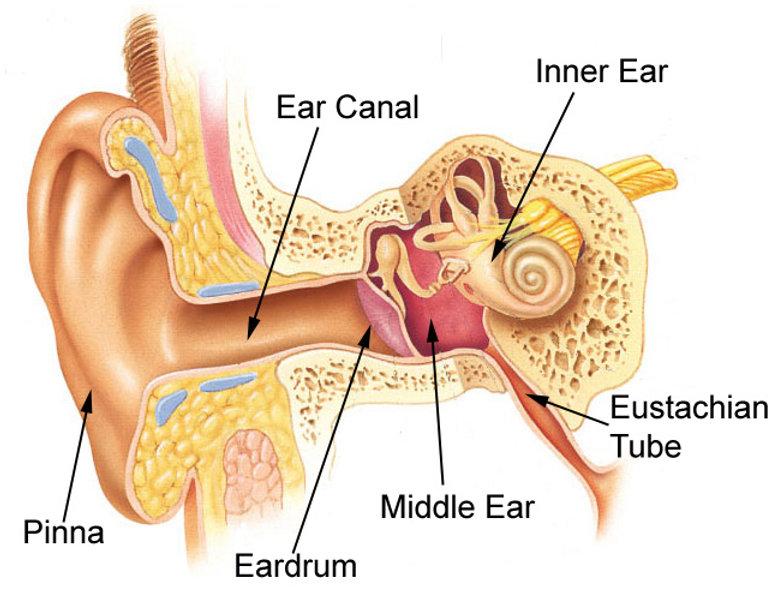
Unlike a patulous Eustachian tube, an obstructed Eustachian tube does not open adequately to regulate middle ear pressure.
This can cause a sensation of fullness, muffled hearing, pressure changes, and popping sounds.
Obstructive Eustachian tube dysfunction may occur alongside nasal inflammation, allergies, or an upper respiratory infection.
The resulting changes in sound transmission may make your own voice sound different, although prominent breathing autophony is more characteristic of a patulous tube.
It is important to distinguish these conditions because their management can differ.
4. Middle Ear Fluid
Fluid behind the eardrum can affect the movement of sound through the middle ear.
As a result, external sounds may become muffled, while the sound of your own voice may seem unusually prominent or distorted.
Middle ear fluid can sometimes develop following respiratory infections or Eustachian tube dysfunction.
An ENT specialist may examine the eardrum and measure middle ear pressure to identify these changes.
5. Superior Semicircular Canal Dehiscence
Superior semicircular canal dehiscence syndrome (SCDS) is a less common inner ear condition involving an abnormal opening or unusually thin area of bone over part of the balance system.
This can change the way sound and pressure are transmitted within the inner ear.
Some people experience autophony and become unusually aware of internal sounds.
Symptoms may include:
- Hearing your own voice unusually loudly
- Hearing your heartbeat or footsteps
- Hearing internal movements
- Dizziness triggered by loud sounds
- Balance disturbances associated with pressure changes
Not everyone with this anatomical difference experiences symptoms, and autophony alone does not mean you have SCDS.
Specialist assessment and selected investigations may be necessary when the symptoms suggest this condition.
Why Does My Own Voice Echo in One Ear Instead of Both?
Autophony may affect only one ear because the underlying change in sound transmission or pressure regulation is confined to that ear.
For example, earwax may obstruct one ear canal while the other remains clear.
Similarly, Eustachian tube dysfunction or certain inner ear conditions may affect one side more than the other.
This can produce a noticeable difference between the ears when speaking.
One ear may transmit environmental sounds normally, while the affected ear makes your own voice seem louder or more hollow.
The side involved can help your ENT doctor plan an examination, but it cannot establish the diagnosis by itself.
If a new one-sided hearing symptom is accompanied by sudden hearing loss, prompt medical evaluation is essential.
Why Am I Hearing My Own Voice Echo in My Ear Along With My Breathing?
Hearing your voice and breathing unusually loudly in the same ear can be a clue to patulous Eustachian tube dysfunction. This occurs when an abnormally open Eustachian tube allows sound from the nasal passages to reach the middle ear more readily.
Patients may notice breathing noises, a hollow voice, or a sensation of movement inside the ear.
These symptoms may become more noticeable during particular activities or at certain times of the day.
However, similar hearing sensations can occur in other conditions.
An ENT specialist may examine the eardrum while the patient breathes through the nose and may perform middle ear function tests.
This helps distinguish patulous Eustachian tube dysfunction from conditions that require different treatment.
Autophony, Blocked Ear, or Tinnitus: What Is the Difference?
Autophony, blocked-ear sensations, and tinnitus describe different hearing experiences, although they can occur together.
Understanding these differences may help you explain your symptoms accurately.
Hearing experience | What you may notice | Possible explanation |
Autophony | Your own voice sounds unusually loud or hollow | Altered transmission of internal sounds |
Blocked ear | Pressure, fullness, or muffled hearing | Earwax, Eustachian tube problems, or middle ear fluid |
Tinnitus | Ringing, buzzing, or other sounds without an external source | Various auditory conditions |
Breathing autophony | Breathing sounds unusually loud inside the ear | May suggest patulous Eustachian tube dysfunction |
Sound-related dizziness | Dizziness triggered by loud sounds | May suggest a specific inner ear disorder |
These symptoms overlap, and the table is not a diagnostic tool.
For example, a patient may describe autophony as an echo, while another person may use the same word for tinnitus or muffled hearing.
Accurate diagnosis depends on clinical history, examination, and any necessary tests.
Can Air Conditioning, Flying, or Nasal Allergies Cause Your Voice to Sound Different?
Air travel and nasal inflammation can influence middle ear pressure and hearing sensations. However, they do not necessarily cause true autophony.
In Qatar, people frequently move between air-conditioned indoor environments and outdoor conditions. Some also experience nasal dryness, congestion, or allergic symptoms.
Air conditioning itself is not an established direct cause of autophony.
However, nasal inflammation or congestion may affect Eustachian tube function in susceptible individuals.
Changes During Air Travel
During take-off and landing, cabin pressure changes can temporarily affect pressure inside the middle ear.
This may cause popping, fullness, discomfort, or muffled hearing.
These sensations often settle as middle ear pressure equalises, but persistent symptoms may need evaluation.
Nasal Allergies and Congestion
Nasal allergies can contribute to swelling around the Eustachian tube opening.
This may interfere with normal pressure regulation and create sensations of ear blockage.
It is important not to assume that every unusual hearing symptom is caused by allergies, particularly if it affects only one ear or occurs with noticeable hearing loss.
What Should You Avoid If Your Own Voice Sounds Too Loud?
Avoid treating unexplained autophony as a routine blocked ear without knowing the cause. Self-treatment can delay assessment or worsen certain ear conditions.
Practical precautions include:
- Do not insert cotton buds, hairpins, or other objects into the ear.
- Avoid using ear drops without advice if you have discharge, significant pain, or a possible eardrum perforation.
- Do not repeatedly force pressure changes by blowing against a closed nose.
- Avoid starting decongestants solely to treat autophony without medical advice.
- Do not stop prescribed medicines unless your clinician advises you to do so.
- Record when symptoms occur and whether they change with posture, breathing, or activity.
Keeping a short symptom diary may help your ENT specialist identify patterns.
ENT & Audiology Care at Turkish Hospital in Doha
An unusually loud or echoing voice inside one ear may be distracting, uncomfortable, or difficult to explain. However, the symptom has recognised medical explanations, and an appropriate assessment can help identify the cause.
At Turkish Hospital Qatar in Doha, patients can access ENT and Audiology services for evaluation of hearing changes, ear discomfort, and related concerns.
Book your appointment with Dr. Alaa Al Modallal or Dr. Akif Rafi Rafiullah Khan at Turkish Hospital Qatar today, subject to doctor availability.
You Can Book Your Appointment by:
 Call: +974 4499 2444
 WhatsApp: +974 5027 0444
 Visit: C Ring Road, Building 325, New Salata 21377, Doha, Qatar
 Book Appointment Online