

Root Canal Treatment in Doha, Qatar
Turkish Hospital Dental Clinic provides the best Root Canal Treatment, with a focus on accurate diagnosis, patient comfort, and preserving natural teeth whenever possible. If you are experiencing persistent tooth pain, sensitivity, swelling, or discomfort while chewing, our dental team can assess the cause and recommend the most appropriate treatment for your condition.
With access to specialist dental care and advanced diagnostic services, Turkish Hospital offers a convenient Root Canal Clinic in Doha for patients seeking timely evaluation and personalized treatment planning.
Experiencing persistent tooth pain or sensitivity?
Book an Appointment Online with Turkish Hospital or Call: +974 4499 2444.
What Is Root Canal Treatment?
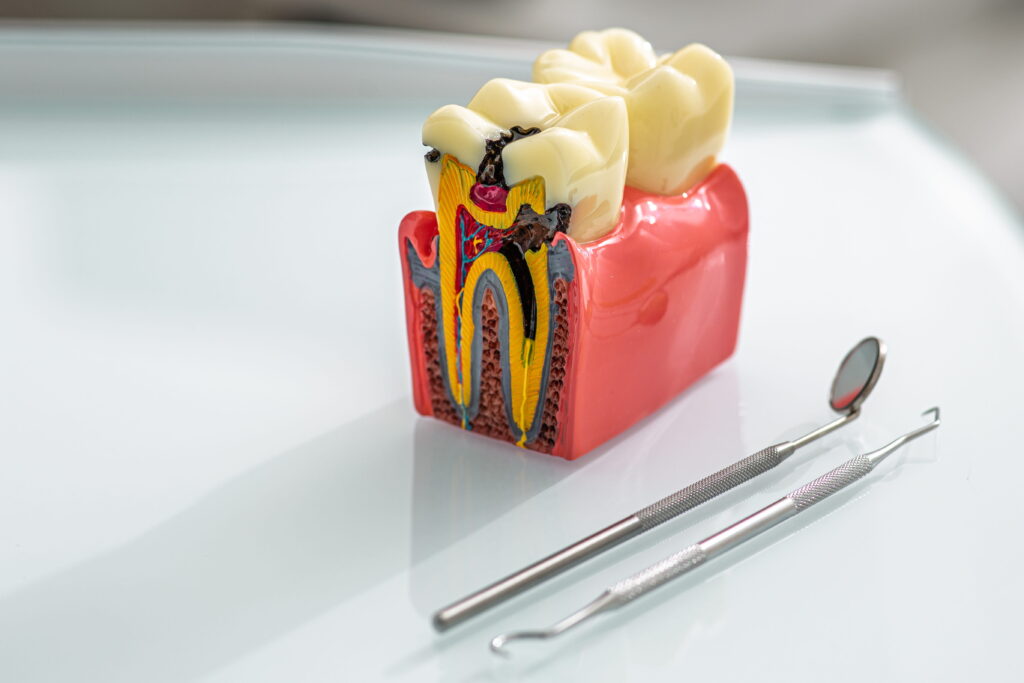
Root canal treatment removes inflamed or infected dental pulp from inside a tooth, cleans and disinfects the root canal space, and seals it to help preserve the tooth.
The dental pulp is the soft tissue inside a tooth containing nerves, blood vessels and connective tissue. When this tissue becomes severely inflamed or infected, simply placing a filling may no longer be enough to manage the problem.
During endodontic treatment, the affected pulp is removed while the outer structure of the tooth is retained whenever it can be predictably restored.
The aim is not merely to stop toothache. Treatment addresses the source of disease inside the tooth while helping maintain your natural bite and tooth function.
When Might You Need Root Canal Treatment?
A dentist may recommend Root Canal Treatment after examining the tooth and determining that its pulp is irreversibly inflamed, damaged or infected.
Common causes can include:
- Deep tooth decay that reaches the pulp
- A cracked, chipped or fractured tooth
- Trauma or injury to a tooth
- Repeated dental procedures on the same tooth
- Problems beneath an existing restoration
- Infection or an abscess associated with the tooth
Pulp damage can sometimes occur after an injury even when no obvious crack is visible.
Signs That May Need Dental Assessment
Symptoms differ from person to person. Possible warning signs include:
- Persistent or severe toothache
- Pain when biting or chewing
- Lingering sensitivity to hot or cold
- Tender or swollen gums around a tooth
- A small recurring swelling or “pimple” on the gum
- A chipped or cracked tooth
- Darkening or discoloration of a tooth
- Swelling around the affected area
These symptoms do not automatically mean you need a root canal. Other dental conditions can produce similar symptoms, which is why examination and diagnosis are important.
Can You Need a Root Canal Without Severe Pain?
Yes.
A damaged or infected pulp does not always produce intense pain. Some teeth may become less sensitive as pulp tissue deteriorates, while infection continues around the root.
That is why a dentist considers your symptoms together with examination findings and appropriate dental imaging instead of relying on pain alone.
What Happens If an Infected Tooth Is Left Untreated?
An infection inside a tooth does not normally resolve simply because the pain decreases.
Untreated pulp infection may progress and contribute to an abscess or inflammation in tissues surrounding the tooth. In some cases, a tooth that could previously have been restored may eventually become unsuitable for root canal treatment and require extraction.
Prompt assessment is particularly important when dental pain is accompanied by noticeable swelling or symptoms that are becoming worse.
Is Root Canal Treatment Painful?
Root canal treatment is generally performed under local anaesthesia, so the treatment area is numbed during the procedure.
The procedure is intended to address pain associated with damaged or infected pulp rather than create it. Some pressure or movement may still be noticeable during treatment.
Afterwards, the tooth and surrounding area may feel tender or sensitive for several days while the tissues recover. Increasing pain, significant swelling or symptoms that do not improve should be discussed with your dental team.
How Long Does Root Canal Treatment Take?
There is no single treatment duration that applies to every patient.
Root canal treatment may sometimes be completed in one appointment, while other teeth require more than one visit.
Factors that can influence treatment complexity include:
- Which tooth requires treatment
- Number and shape of the root canals
- Extent of inflammation or infection
- Previous root canal treatment
- Existing crowns or restorations
- Tooth damage or cracks
- Need for additional restorative treatment
Will I Need a Crown After Root Canal Treatment?
Not every root canal-treated tooth automatically requires the same type of restoration.
After endodontic treatment, however, the tooth needs an appropriate permanent restoration to protect it against leakage and restore its function.
Back teeth such as premolars and molars are exposed to substantial chewing forces and often require greater protection. Front teeth may sometimes be restored differently depending on how much healthy tooth structure remains.
Your dentist will determine whether a filling, crown or another restoration is most appropriate.
Completing the recommended restoration is an important part of the treatment—not an optional detail to ignore once the root canal itself has finished.
Root Canal Treatment Recovery and Aftercare
Mild tenderness around the treated tooth can occur after treatment.
Follow the instructions provided by your dental team, particularly while a temporary filling or restoration is present.
General aftercare may include:
- Avoid biting hard foods with the treated tooth until advised otherwise
- Continue brushing and flossing carefully
- Attend the recommended restoration and follow-up appointments
- Avoid damaging habits such as chewing ice or using teeth to open objects
- Contact your dental team if your temporary restoration becomes loose or is lost
You should contact your dental provider if you develop severe or increasing pain, visible swelling, a bite that feels significantly uneven, loss of the temporary restoration, or a return of your original symptoms.
What Are the Benefits of Saving a Natural Tooth?
When a tooth is suitable for root canal treatment and restoration, preserving it may provide several practical benefits.
These include:
- Maintaining your natural tooth
- Preserving chewing function
- Maintaining your existing bite
- Avoiding a gap from tooth removal
- Reducing the immediate need to replace a missing tooth
Root canal treatment is therefore generally considered a tooth-preserving procedure rather than simply a treatment for dental pain.
However, treatment success can never be guaranteed. Tooth condition, root anatomy, infection, cracks, restoration quality and future oral care can all affect the long-term outcome.
Can a Root Canal-Treated Tooth Become Infected Again?
Yes.
A previously treated tooth can occasionally develop new symptoms months or years later.
Possible reasons include complex canal anatomy, untreated canals, delayed restoration, leakage around a restoration, new decay or damage to the tooth.
In selected cases, root canal retreatment may provide another opportunity to preserve the tooth. Other cases may require endodontic surgery or extraction depending on the diagnosis.
If a previously root canal-treated tooth becomes painful, swollen or uncomfortable, it should be reassessed instead of assuming that extraction is automatically necessary.
Root Canal Treatment vs Tooth Extraction
Root canal treatment and tooth extraction solve different clinical problems.
Consideration | Root Canal Treatment | Tooth Extraction |
Main objective | Treat disease inside the tooth and preserve it | Remove the tooth |
Natural tooth retained | Yes, when treatment is successful | No |
Restoration | Usually required after treatment | Tooth replacement may be considered afterwards |
Suitable for every case? | No | No |
Decision depends on | Restorability, infection, cracks, tooth support and other clinical factors | Prognosis of tooth and overall treatment plan |
A severely fractured tooth, a tooth with inadequate support or a tooth that cannot be predictably restored may not be suitable for root canal treatment.
The most appropriate option should therefore be based on an examination rather than choosing extraction or root canal treatment solely because one appears faster or cheaper.
Book Root Canal Treatment in Doha
Persistent tooth pain, prolonged sensitivity or swelling should not be ignored.
If you are concerned about an infected or damaged tooth, the dental team at Turkish Hospital can evaluate the problem and determine whether Root Canal Treatment, another restorative procedure or a different treatment is appropriate.