24-Hour Emergency
Call Us Urgent 24/7
+974 4499 2444C Ring Road, Building 325, New Salata 21377, Doha, Qatar
C Ring Road, Building 325, New Salata 21377, Doha, Qatar

The Radiology Center at Turkish Hospital in Doha, Qatar provides diagnostic imaging and image-guided procedures to support the investigation, diagnosis, treatment planning, and follow-up of a wide range of medical conditions. Patients using our Imaging Center have access to X-ray, ultrasound, Doppler ultrasound, computed tomography (CT), magnetic resonance imaging (MRI), mammography, bone densitometry, angiographic imaging, and selected image-guided procedures.
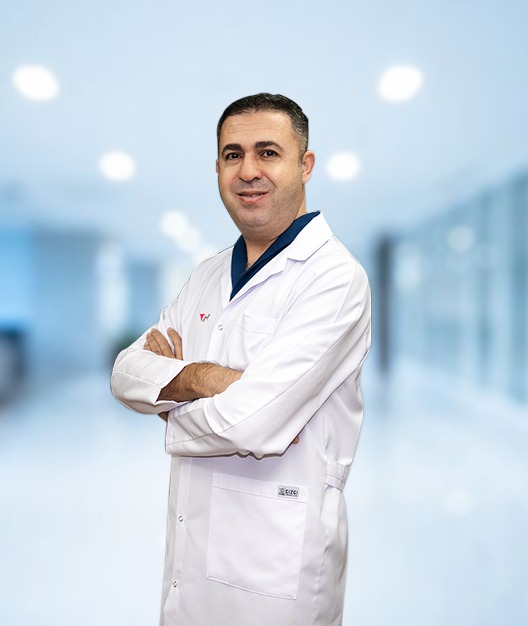
The department is led clinically by Dr. Huseyin Yetis, Consultant in Diagnostic Radiology, whose experience includes MRI, CT, ultrasound, neuroimaging, musculoskeletal imaging, head and neck imaging, breast imaging, and abdominal radiology. Turkish Hospital’s current Radiology service also operates within a digital environment supported by a Radiology Information System (RIS) and Picture Archiving and Communication System (PACS).
Need an imaging examination? Book an appointment or contact Turkish Hospital to confirm the appropriate scan, preparation requirements, and availability.
A Radiology Center uses medical imaging to help doctors examine structures inside the body, investigate symptoms, confirm or exclude certain conditions, plan treatment, and monitor patients over time.
Radiologists are medical doctors trained to interpret imaging examinations and provide diagnostic information to the patient’s treating physician. Some radiologists also perform procedures using ultrasound or CT guidance.
X-ray imaging provides quick images of structures inside the body and is commonly used when doctors need to assess bones, the chest, or other areas where radiography can provide useful diagnostic information.
Turkish Hospital’s Imaging Center provides routine radiography for different parts of the body.
The correct imaging examination depends on the clinical problem, so an X-ray is not automatically the best test for every symptom.
Ultrasound uses sound waves to create images of internal organs and soft tissues without using ionizing radiation.
Turkish Hospital currently provides ultrasound examinations involving the:
The department also provides ultrasound-guided procedures.
The radiologist or referring physician determines the most appropriate examination.
Doppler ultrasound evaluates the movement of blood through arteries and veins while also providing ultrasound images of the surrounding structures.
Turkish Hospital’s current scope includes arterial and venous Doppler examinations.
A Doppler examination may be requested when a doctor needs information about blood flow or circulation in a particular area.
The exact study depends on the suspected vascular problem and the part of the body being examined.
Computed tomography uses X-rays and computer processing to create detailed cross-sectional images of the body.
Turkish Hospital’s current Radiology page identifies a 64-MD CT system and lists CT examinations involving the head, neck, chest, abdomen, extremities, and whole-body imaging where clinically appropriate.
Not every patient with these symptoms needs CT, and the choice of imaging depends on the clinical situation.
CT angiography uses CT imaging together with contrast material to create detailed images of blood vessels.
Turkish Hospital lists CT angiography among its current Radiology services.
The department’s original content also refers to coronary imaging and calcium scoring. These procedures should be clearly separated on the final page because coronary CT angiography and coronary artery calcium scoring are different examinations.
3D CT reconstruction can create three-dimensional views from CT data when this provides additional information for clinical assessment or treatment planning.
Turkish Hospital lists 3D CT within the department’s current imaging capabilities.
CT guidance can help a radiologist accurately position a needle or other instrument during selected diagnostic or drainage procedures.
Turkish Hospital’s current Radiology scope includes:
These procedures are performed only when clinically indicated and after appropriate assessment.
MRI uses a strong magnetic field and radiofrequency signals to produce detailed images of internal structures without using ionizing X-rays.
Turkish Hospital currently lists a 1.5 Tesla MRI system for imaging areas including:
MRI may be recommended when a doctor needs detailed information about areas such as:
The choice between MRI and another test depends on the clinical question.
MR angiography uses MRI techniques to create images of blood vessels.
Turkish Hospital includes MR angiography within its existing Radiology Center services.
Whether CT angiography or MR angiography is more appropriate depends on the part of the body being examined and individual clinical circumstances.
Mammography uses specialized X-ray imaging to examine breast tissue and may be used for screening or diagnostic assessment according to a patient’s age, symptoms, and medical history.
Patients may be referred for breast imaging because of:
A doctor determines which type of breast imaging is most appropriate.
Bone densitometry measures bone mineral density and can help doctors assess bone strength and the risk of osteoporosis-related problems.
Bone densitometry is included among the services at Turkish Hospital’s Imaging Center.
A physician may recommend the examination based on factors such as age, medical history, previous fractures, medication use, or other clinical risk factors.
Intravenous pyelography is an X-ray-based examination used to visualize parts of the urinary system after intravenous contrast administration.
Turkish Hospital currently lists IVP among its Radiology procedures.
Because CT and other modern imaging techniques are now commonly used for many urinary-system investigations, I recommend confirming which indications Turkish Hospital currently uses IVP for before expanding this section further.
Ultrasound guidance allows the radiologist to visualize the target area in real time while obtaining a tissue sample.
Turkish Hospital currently provides ultrasound-guided biopsy within its Radiology service.
The need for a biopsy is determined by the treating physician and radiologist after reviewing the relevant clinical and imaging findings.
Image guidance can help a physician accurately position a needle or drainage device within a selected fluid collection or abscess.
Turkish Hospital lists ultrasound-guided abscess drainage among its current services.
Not every abscess requires image-guided drainage; the treatment approach depends on location, size, symptoms, and clinical assessment.
Turkish Hospital’s Radiology Department operates in a digital imaging environment supported by a Radiology Information System (RIS) and Picture Archiving and Communication System (PACS).
These systems support the organization, storage, retrieval, and clinical review of medical images and radiology information.
For patients, an integrated digital system can help different clinical teams access relevant imaging as part of coordinated care within the hospital.
Portable imaging allows selected examinations to be performed when moving a patient to the main Radiology Department is not appropriate or practical.
Turkish Hospital’s current service page lists portable examinations for:
The type of portable examination available depends on the patient’s clinical needs and hospital protocols.
Turkish Hospital’s Radiology page states that emergency examinations are available 24/7 to support patients who require urgent diagnostic imaging.
The hospital’s general operating-hours page separately confirms that the Emergency Department operates 24/7, while most routine clinics follow different hours.
For urgent symptoms or serious injury, patients should access imaging through the appropriate emergency pathway rather than waiting for a routine Radiology appointment.
The imaging process depends on the examination ordered, but most visits include confirming the requested study, reviewing relevant safety information, performing the scan, and having the images interpreted by a radiologist.
Preparation differs between X-ray, ultrasound, CT, MRI, mammography, and other examinations. Follow the specific instructions given for your test rather than assuming every scan requires the same preparation.
Some CT, MRI, and angiographic examinations may require contrast material, while many imaging examinations do not.
The decision depends on the clinical question and the type of examination.
Tell the Radiology team about any previous contrast reaction or relevant medical condition before receiving contrast material.
Turkish Hospital’s current Radiology service page does not explicitly state whether every imaging modality is routinely available for both adults and children.
The hospital has a dedicated Pediatrics Department, which operates 24/7. For pediatric imaging, parents should confirm the appropriate imaging pathway and availability when booking or during pediatric assessment.
This wording is safer than claiming universal pediatric imaging availability without confirmation from the Radiology Department.
Turkish Hospital’s Radiology Center and Imaging Center in Doha, Qatar combine multiple diagnostic imaging modalities, image-guided procedures, digital RIS/PACS infrastructure, portable imaging capability, emergency imaging support, and Consultant Radiologist Dr. Huseyin Yetis within one hospital-based service.
The purpose of imaging is not simply to produce a scan, but to provide clinically useful information that supports the patient’s treating physician in reaching a diagnosis and planning appropriate care.
Diagnostic imaging can be an important part of understanding unexplained symptoms, evaluating injuries, planning treatment, monitoring known conditions, or deciding whether further medical care is required.
If your doctor has recommended X-ray, ultrasound, CT, MRI, mammography, Doppler imaging, bone densitometry, or another radiological examination, contact the Radiology & Imaging Center Doha at Turkish Hospital to confirm your appointment, preparation requirements, and appropriate imaging pathway.
Our team is here to help you schedule an appointment or answer your questions.
Most Clinics
Saturday–Thursday
8:00 AM–9:00 PM
Please note that operating hours may vary by department and doctor availability.
Extended Hours
• Obstetrics & Gynecology
8:00 AM–12:00 Midnight
• Dental Clinic
Saturday – Thursday
8:00 AM–12:00 Midnight
Friday
02:00 PM–10:00 PM
24/7 Services
• Pediatrics : Open 24/7
• Emergency Department : Open 24/7
Beauty Clinic: 10:00 AM–6:00 PM

We always support in emergencies, contact us immediately if you are experiencing any serious health problems.
Support mail: info@turkishhospitals.com