24-Hour Emergency
Call Us Urgent 24/7
+974 4499 2444C Ring Road, Building 325, New Salata 21377, Doha, Qatar
C Ring Road, Building 325, New Salata 21377, Doha, Qatar

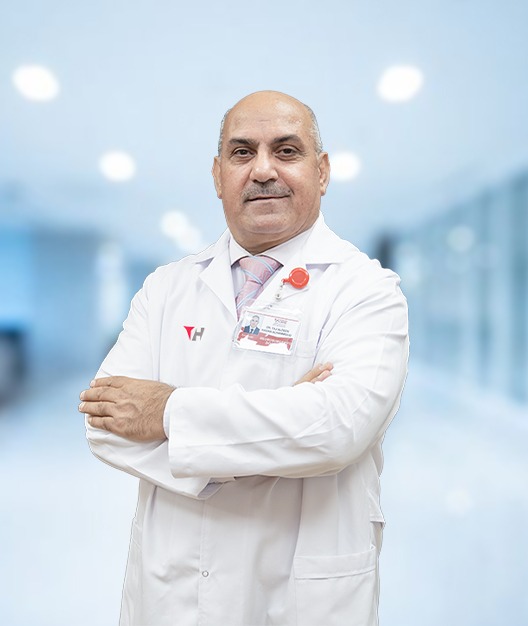
At Turkish Hospital, our Neurosurgery and Spine Department provides specialist assessment and surgical care for conditions affecting the brain, skull, spine, spinal cord, and related nerves. Under the care of Dr. Taj Aldeen Hasan Alhammoud, Consultant in Neurosurgery and Spine, patients can receive evaluation for cranial trauma, brain and spinal tumors, hydrocephalus, disc disease, degenerative spinal conditions, vertebral fractures, congenital disorders, and selected chronic pain conditions.
Our approach begins with careful clinical assessment and review of relevant imaging before deciding whether surgery or another treatment pathway is appropriate. Depending on the diagnosis, care may include minimally invasive spine surgery, cranial surgery, endoscopic procedures, pain-management interventions, neuromodulation, or ongoing specialist follow-up.
If you are experiencing persistent back or neck pain, weakness, numbness, severe nerve pain, or symptoms related to a diagnosed brain or spine condition, book an appointment with our Neurosurgery and Spine team.
A Neurosurgery & Spine Specialist may be consulted when symptoms suggest compression, injury, structural disease, or another condition involving the brain, spinal cord, spine, or related nerves.
Not every patient with back pain, neck pain, or a disc abnormality needs surgery. A specialist consultation helps determine the cause of the symptoms and whether surgery, pain management, rehabilitation, monitoring, or another approach is appropriate.
Sudden neurological symptoms should not wait for a routine appointment.
Cranial neurosurgery focuses on conditions affecting the brain, skull, cerebrospinal-fluid pathways, and surrounding neurological structures.
Our cranial surgical services include treatment for trauma, tumors, hematomas, hydrocephalus, pituitary adenomas, skull lesions, and selected complex cranial conditions.
Cranial trauma can involve injury to the skull or brain and may require neurological monitoring or surgical treatment depending on the severity of the injury.
Surgical care is available for selected cranial injuries when intervention is clinically necessary.
Our Neurosurgery Department provides surgical care for selected brain tumors, including superficial, posterior fossa, and complex skull-base tumors.
The surgical approach is planned according to the location and characteristics of the tumor, its relationship to important neurological structures, and the patient’s overall condition.
Stereotactic surgery uses precise localization techniques to reach a defined target within the brain.
Our services include stereotactic-guided surgery, microcraniotomy, and biopsy for selected neurological conditions.
A biopsy may be recommended when tissue is required to help establish a diagnosis before deciding on further treatment.
Subdural and epidural hematomas are collections of blood around the brain that can place pressure on neurological structures.
Surgical treatment may be required when the size of the hematoma, neurological symptoms, or clinical deterioration makes intervention necessary.
Hydrocephalus occurs when cerebrospinal fluid accumulates within the brain and creates increased pressure or ventricular enlargement.
A VP shunt redirects cerebrospinal fluid from the brain to another part of the body where it can be absorbed.
Endoscopic third ventriculostomy creates an alternative pathway for cerebrospinal fluid in selected forms of hydrocephalus.
The most appropriate procedure depends on the cause and type of hydrocephalus.
Endoscopic surgery may be used for selected pituitary adenomas when surgical treatment is appropriate.
A pituitary adenoma is a tumor arising from the pituitary gland. Treatment planning considers factors such as tumor size, location, hormone activity, symptoms, and imaging findings.
Selected skull lesions may require surgical treatment after appropriate imaging and specialist evaluation.
Because skull lesions can represent different conditions, treatment is individualized according to the diagnosis.
Microvascular decompression is a specialized neurosurgical procedure used for selected conditions caused by compression of a cranial nerve.
The procedure is considered only after the cause of the symptoms has been clearly established.
Trigeminal neuralgia can cause severe, sudden episodes of facial pain.
For selected patients, treatment may include radiofrequency thermocoagulation after appropriate neurological assessment and confirmation of the diagnosis.
Deep brain stimulation uses implanted electrodes to provide controlled electrical stimulation to selected areas of the brain.
It may be considered for selected movement disorders, including Parkinson’s disease, after detailed specialist and multidisciplinary assessment.
Cingulotomy is a highly specialized neurosurgical procedure that may be considered in carefully selected cases of resistant or central pain disorders and other specific indications.
Because this procedure requires detailed multidisciplinary assessment, suitability is determined individually.
Our spine surgery services address selected conditions affecting the cervical and lumbar spine, spinal cord, nerve roots, vertebrae, and intervertebral discs.
Treatment may range from pain-management procedures to minimally invasive or reconstructive spine surgery depending on the diagnosis.
Cervical microdiscectomy is used in selected patients when a cervical disc problem compresses a nerve or other neurological structure.
Artificial disc replacement may be considered when a damaged cervical disc requires surgical treatment and the patient is suitable for a motion-preserving procedure.
The decision depends on the exact disc problem, spinal stability, anatomy, age, and other clinical factors.
Lumbar microdiscectomy is a focused surgical procedure used for selected lumbar disc problems that place pressure on a nerve root.
The presence of a disc abnormality on MRI does not automatically mean surgery is necessary.
Laminectomy removes part of a vertebral structure to create more space around compressed nerves or the spinal canal.
It may be considered when spinal compression is contributing to persistent pain, weakness, numbness, or difficulty walking.
Spinal fusion joins selected vertebrae to provide stability when instability or another spinal condition makes fusion clinically appropriate.
The decision to perform fusion is based on the exact diagnosis, symptoms, spinal alignment, stability, and imaging findings.
Degenerative spinal disorders can affect discs, joints, nerves, and spinal stability and may cause pain or neurological symptoms.
Our surgical care includes selected cases involving:
Treatment options may include:
Consider an appointment when neck or back symptoms:
Our Neurosurgery and Spine Department provides surgical care for selected tumors affecting the spinal cord and surrounding spaces.
These include:
Treatment planning depends on the tumor’s location, neurological effects, imaging characteristics, and the patient’s overall health.
Vertebroplasty and balloon kyphoplasty are minimally invasive procedures used for selected vertebral fractures.
They may be considered after imaging confirms the fracture and a specialist determines that the patient is an appropriate candidate.
A consultation may be appropriate for persistent severe spinal pain after a diagnosed vertebral fracture or when symptoms continue despite initial treatment.
Epidural steroid injections may be used for selected forms of spinal and nerve-related pain.
Medication is delivered to the epidural space around the spinal nerves to help manage inflammation and pain when clinically appropriate.
Radiofrequency ablation uses controlled energy to target selected pain-transmitting nerves.
It may be considered when the source of chronic pain has been identified and the patient is suitable for this form of treatment.
For carefully selected patients with severe or resistant pain, advanced neurosurgical pain procedures may include:
These techniques are considered only after detailed specialist evaluation.
Spinal cord stimulation is a neuromodulation treatment that uses implanted technology to modify selected pain signals.
It may be considered for patients with chronic or treatment-resistant pain when other approaches have not provided adequate relief and specialist assessment confirms suitability.
Our Neurosurgery and Spine Department also provides specialist surgical care for selected congenital neurological and spinal conditions.
These include:
Chiari malformation involves abnormal positioning of structures at the lower part of the brain in relation to the base of the skull.
Surgery may be considered when symptoms, neurological findings, and imaging indicate that decompression or another procedure is appropriate.
Tethered cord syndrome occurs when the spinal cord is abnormally attached or restricted within the spinal canal.
Selected patients may require surgery to release the tethered cord and reduce ongoing neurological strain.
Meningocele and myelomeningocele are congenital spinal conditions that may require specialized neurosurgical treatment.
The surgical approach depends on the individual anatomy and neurological condition.
A Neurosurgery and Spine consultation focuses on understanding your symptoms, neurological function, imaging findings, previous treatment, and overall health before deciding on the most appropriate next step.
Your consultation may include:
If available, bring your previous MRI or CT images, radiology reports, medication list, and relevant medical records.
Brain and spine conditions can affect movement, sensation, balance, independence, sleep, work, and everyday quality of life. Because similar symptoms can arise from very different conditions, accurate specialist assessment is an important first step before deciding on treatment.
If you are looking for a Neurosurgery & Spine Specialist in Doha, Qatar, book a consultation with Dr. Taj Aldeen Hasan Alhammoud at Turkish Hospital to discuss your symptoms, imaging findings, and available treatment options.
Our team is here to help you schedule an appointment or answer your questions.
Most Clinics
Saturday–Thursday
8:00 AM–9:00 PM
Please note that operating hours may vary by department and doctor availability.
Extended Hours
• Obstetrics & Gynecology
8:00 AM–12:00 Midnight
• Dental Clinic
Saturday – Thursday
8:00 AM–12:00 Midnight
Friday
02:00 PM–10:00 PM
24/7 Services
• Pediatrics : Open 24/7
• Emergency Department : Open 24/7
Beauty Clinic: 10:00 AM–6:00 PM

We always support in emergencies, contact us immediately if you are experiencing any serious health problems.
Support mail: info@turkishhospitals.com