
Fluoride treatment can help adults prevent tooth decay, particularly when they have a higher risk of cavities. However, not every adult needs professional fluoride applications at every dental visit. The decision depends on your teeth, medical history, daily habits and existing fluoride exposure.
If you live in Doha, Qatar, and wonder whether brushing alone provides enough protection, a dental assessment can help. The dental center at Turkish Hospital Qatar offers topical fluoride treatment as part of its general dentistry services.
What Is Fluoride Treatment?
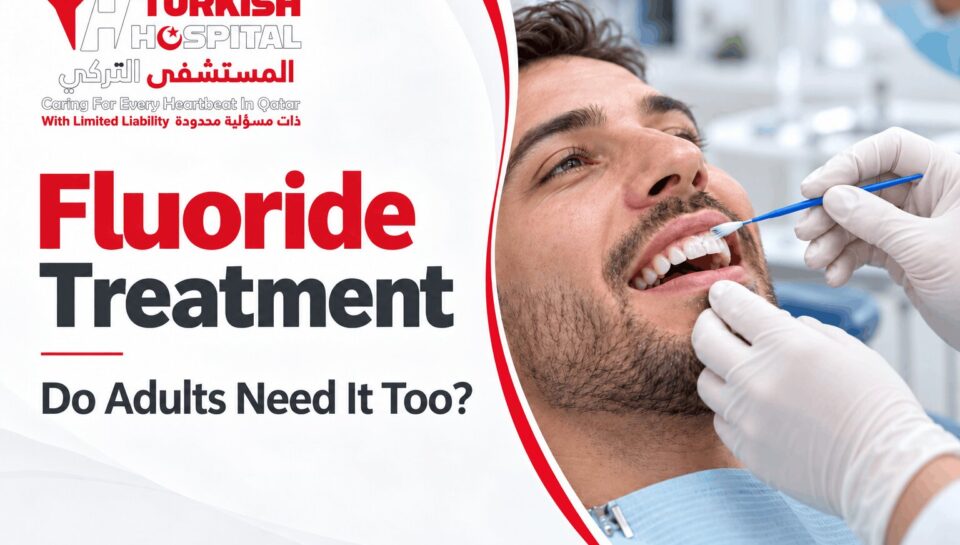
Fluoride treatment involves applying fluoride to teeth to help protect them against decay. Professional fluoride treatment uses products that a dental professional selects and applies according to your needs.
Fluoride is a naturally occurring mineral. Dentists use it in preventive dentistry because it helps teeth resist the conditions that lead to cavities.
You may already use fluoride through toothpaste or mouthrinse. Professional applications provide another option when your dentist identifies a need for additional protection.
What is topical fluoride?
Topical fluoride acts directly on tooth surfaces. Examples include fluoride toothpaste, certain mouthrinses, fluoride gels and fluoride varnish.
Professional treatment and everyday home care serve related but different purposes. Your dentist considers both when recommending a prevention plan, rather than assuming that a clinic application can replace regular brushing.
Do Adults Need Fluoride Treatment?
Some adults benefit from additional fluoride, while others may obtain adequate protection from their usual preventive routine. A dentist should assess your cavity risk before recommending professional applications.
Age alone does not determine whether you need treatment. Two adults of the same age may have very different dental histories and prevention needs.
For example, one person may have no recent decay and maintain effective daily care. Another may develop new cavities despite brushing regularly, particularly if other risk factors affect their oral health.
The American Dental Association’s guidance supports professional or prescription-strength topical fluoride for people at increased risk of dental caries—the clinical term for tooth decay. It also recognises that treatment decisions should reflect professional judgement and the patient’s circumstances.
During your appointment, ask: “What makes my cavity risk higher or lower, and what additional benefit would this treatment offer?”
How Does Fluoride Help Strengthen Tooth Enamel?
Fluoride helps strengthen tooth enamel by supporting mineral replacement and making the tooth surface more resistant to acid. This repair process is called enamel remineralization.
Bacteria in the mouth produce acids when they use sugars from food and drinks. Those acids can remove minerals from enamel, the hard outer surface of a tooth. Dentists call this mineral loss demineralization.
Fluoride helps tip the balance towards protection and repair. It works alongside minerals in saliva to support tooth surfaces between acid attacks.
However, “strengthening enamel” does not mean growing a completely new layer of tooth structure. Fluoride helps protect existing teeth; it does not make them immune to cavities or remove the need for daily care.
Which Adults May Benefit from Additional Fluoride?
Adults with recent decay, persistent dry mouth or exposed tooth roots may need a closer assessment of their fluoride needs. These factors help guide a recommendation; none replaces an examination.
Adults with repeated cavities
A history of recurring tooth decay can signal that your current prevention routine needs adjustment. Your dentist may discuss fluoride alongside brushing technique, diet and cleaning between teeth.
Bring details of recent fillings or previous dental treatment, especially if you have changed clinics. This information helps the dentist understand whether decay is an ongoing problem.
Adults with dry mouth
Persistent dry mouth can increase tooth decay risk because saliva helps protect teeth. Saliva washes away food particles and supplies minerals that support the tooth surface.
Some medicines, medical conditions and cancer treatments can reduce saliva or change how it feels. Tell your dentist about persistent dryness and bring an up-to-date medicine list.
Additional fluoride may form part of a prevention plan, but it does not identify or treat the underlying cause of dry mouth. Do not stop prescribed medication without speaking to the clinician who manages it.
Adults with gum recession or difficult-to-clean areas
Gum recession can expose tooth roots, creating areas that need particular attention. Dentists may also assess cleaning around crowns, bridges or orthodontic appliances.
Having dental restorations does not automatically mean you need fluoride treatment. The condition of the surrounding natural teeth and your ability to keep them clean matter.
Older adults may benefit from a review of these factors, particularly when medical treatment or changes in daily routines affect oral care.
Unsure about your cavity risk? Book a dental consultation to discuss your symptoms, dental history and prevention options.
Is Fluoride Toothpaste Enough for Adults?
Fluoride toothpaste provides routine protection, but some adults need additional measures. Your dentist can explain whether professional treatment or a prescription product would add value to your current care.
The options below are not interchangeable.
Option | Main purpose | How to approach it |
Fluoride toothpaste | Everyday fluoride exposure during brushing | Use consistently as part of daily care |
Professional fluoride varnish | Additional topical protection | Discuss whether your cavity risk justifies it |
Professionally applied fluoride gel | Another clinical fluoride option | Let the dentist select a suitable product |
Prescription-strength fluoride toothpaste | Additional home protection for selected patients | Use only according to the prescription |
For everyday care, brush twice daily for about two minutes with fluoride toothpaste. Clean all tooth surfaces and ask your dentist about cleaning between teeth. The NHS advises adults to use toothpaste containing at least 1,350 parts per million of fluoride, unless their dental professional recommends otherwise.
How Often Should Adults Have Fluoride Treatment?
There is no single fluoride treatment schedule for every adult. Your dentist should recommend an interval based on your risk and review that recommendation as your circumstances change.
For adults at increased risk, ADA guidance includes applications at intervals of three to six months for certain professional products. This is not a requirement for every patient attending a routine check-up.
Ask your dentist to explain the reason for the proposed interval. A useful prevention plan should answer three questions: why you need treatment, how often to return and what to do between appointments.
Mention any changes since your last visit, including new medication, persistent dryness or recent dental problems. Your prevention needs may change even when your brushing routine stays the same.
Can Fluoride Treatment Replace a Filling or Dental Cleaning?
Fluoride can help stop or reverse early mineral loss, but it cannot rebuild a cavity once a hole has formed. Professional cleaning also serves a different purpose from fluoride application.
Early decay can sometimes improve before the tooth surface breaks down. Once decay creates a cavity, the dentist must assess the damage and recommend appropriate treatment.
Depending on the findings, you may need a tooth filling rather than fluoride alone. Do not postpone an assessment because you hope a fluoride product will repair a visible hole.
Similarly, scaling and polishing addresses cleaning needs; fluoride application focuses on additional protection against decay. Ask the dentist to explain the purpose of each recommended procedure.
A preventive appointment should leave you understanding both the problem and the proposed solution. You can also ask which treatments are necessary now and which depend on your future risk.
Is Fluoride Treatment Safe for Adults?
Fluoride products are safe and effective for preventing tooth decay when clinicians and patients use them as directed. The amount, formulation and method of use matter.
Professional treatment uses a controlled application. Home products also have instructions that you should follow, especially when a dentist prescribes a higher-strength formulation.
Do not swallow fluoride toothpaste or mouthrinse intentionally, and do not combine several prescription products without checking with your dentist. Tell the clinic about known allergies and previous reactions so the team can review the ingredients of the proposed product.
Fluoride Treatment in Doha at Turkish Hospital Qatar
If you are considering fluoride treatment in Doha, Qatar, a consultation can help establish whether additional fluoride is suitable for your individual needs.
Book your appointment at Turkish Hospital Qatar to discuss fluoride treatment and a practical prevention plan.
You Can Book Your Appointment by:
 Call: +974 4499 2444
 WhatsApp: +974 5027 0444
 Visit: C Ring Road, Building 325, New Salata 21377, Doha, Qatar
 Book Appointment Online