


Green smoothies are often seen as a healthy way to include more fruits and vegetables in your diet. But if you have chronic kidney disease (CKD), you may wonder whether your usual smoothie is still a good choice.
The relationship between green smoothies and kidney disease is more complicated than simply calling a drink healthy or unhealthy. Some smoothies contain considerable amounts of potassium, phosphorus, or fluid, which may need to be monitored depending on your kidney function.
At Turkish Hospital Qatar, our Dietetics & Nutrition Clinic supports patients with individualized nutrition advice for kidney disease and other medical conditions.
This guide explains how smoothie ingredients affect kidney health, which foods may require extra attention, and how to make informed choices when living with kidney disease in Doha, Qatar.
Green Smoothies and Kidney Disease
Green smoothies can be suitable for some people with kidney disease, but they are not appropriate for everyone. The main considerations include the types and quantities of ingredients, current blood potassium levels, kidney function, and any prescribed fluid restriction.
Chronic kidney disease affects how well the kidneys perform important functions, including regulating certain minerals and removing waste products from the blood.
As kidney function changes, dietary requirements may change too.
Some people with early-stage CKD have relatively few restrictions. Others, particularly those with advanced kidney disease or receiving dialysis, may need more careful nutrition planning.
This means two people with kidney disease could receive different advice about the same smoothie.
Why Does the Type of Kidney Disease Matter?
The term kidney disease describes several conditions that can affect kidney function.
For people with CKD, nutrition decisions may depend on:
- Current kidney function and stage of CKD.
- Blood potassium and phosphorus results.
- Whether dialysis is required.
- The type and frequency of dialysis.
- Other conditions, such as diabetes or heart disease.
- Medications that affect potassium balance.
- Appetite, body weight, and nutritional requirements.
A diet suitable for one person may be unnecessarily restrictive or inappropriate for someone else.
Why Can Potassium in Smoothies Be a Concern for Kidney Disease?
Potassium in smoothies can become a concern when kidney function is reduced and the body cannot maintain a safe blood potassium level. However, not everyone with chronic kidney disease needs to follow a low-potassium diet.
Potassium is a mineral that supports normal nerve function, muscle activity, and heart rhythm.
Healthy kidneys help maintain potassium within an appropriate range by removing excess amounts through urine.
When kidney function becomes significantly impaired, potassium may accumulate in the blood.
An abnormally high blood potassium level is called hyperkalemia.
What Happens When Blood Potassium Becomes Too High?
High potassium can interfere with normal electrical activity in the heart.
Some people experience no obvious symptoms, while others may develop muscle weakness, palpitations, or other concerning symptoms.
Severe hyperkalemia can cause dangerous heart rhythm problems and requires urgent medical treatment.
Blood tests, rather than symptoms alone, are used to identify elevated potassium levels.
Why Can a Smoothie Contain More Potassium Than Expected?
Smoothies often combine several servings of fruits and vegetables into one drink.
For example, a smoothie might contain:
- One banana.
- A generous handful of spinach.
- Half an avocado.
- Coconut water.
- Additional fruit.
Each ingredient contributes potassium.
Although the smoothie may contain vitamins and fiber, the combined potassium content can be substantial.
Blending does not remove potassium from fruits and vegetables.
For someone who needs to limit potassium, the total amount consumed matters more than whether the drink is labelled natural, organic, or healthy.
Which Green Smoothie Ingredients May Be High in Potassium?
Bananas, avocado, coconut water, and large quantities of some leafy greens can increase the potassium content of green smoothies. These ingredients are not inherently harmful, but portions and individual kidney requirements determine whether they are suitable.
1. Spinach and Kidney Disease
Spinach contains vitamins, minerals, and antioxidants, but it also contributes potassium.
The amount of potassium depends on the portion and how spinach is prepared.
A small amount of raw spinach may fit into some patients’ diets. A large serving of cooked or concentrated spinach can provide considerably more potassium.
People who have been told to restrict potassium should discuss appropriate portions with their renal dietitian.
Spinach also contains oxalates, which may be relevant for people with certain types of kidney stones. However, kidney-stone prevention and chronic kidney disease nutrition are not identical.
2. Banana Smoothies and Kidney Disease
Bananas are a convenient smoothie ingredient because they add sweetness and a creamy texture.
However, bananas are relatively rich in potassium compared with many other fruits.
For people following a potassium-restricted diet, using a whole banana alongside other potassium-rich ingredients may be unsuitable.
Depending on an individual’s nutrition plan, a smaller banana portion or an alternative fruit may be more appropriate.
3. Avocado in Smoothies
Avocado provides unsaturated fats and a creamy texture.
It also contributes potassium.
A large avocado portion may increase the total potassium content of the drink, especially when combined with banana or other higher-potassium ingredients.
Patients should consider the overall recipe rather than evaluating avocado alone.
4. Coconut Water
Coconut water is often marketed as a natural hydration drink.
However, it can contain substantial potassium.
People with elevated blood potassium or prescribed potassium restrictions should not assume coconut water is a safer smoothie base than ordinary water.
5. Dried Fruits and Concentrated Ingredients
Dates, raisins, and other dried fruits can add sweetness to smoothies.
Because drying removes water, a relatively small amount of dried fruit can contribute concentrated nutrients and sugars.
Dried fruit can also add significant potassium.
In Qatar, where dates are widely available and commonly eaten, patients with potassium restrictions should check suitable serving sizes rather than automatically adding several dates to a smoothie.
Smoothie Ingredient Comparison
Ingredient | General potassium consideration | Practical guidance |
Banana | Relatively high per common serving | Consider a smaller portion if potassium is restricted |
Avocado | Potassium-rich | Avoid combining large amounts with several other potassium-rich foods |
Spinach | Varies by portion and preparation | Check quantities; concentrated servings need attention |
Coconut water | Can be high in potassium | Do not assume it is a low-potassium drink |
Dates and dried fruit | Often potassium-rich | Use only within an individualized plan |
Berries | Often lower in potassium per typical serving | May be useful alternatives in measured portions |
Apple | Generally lower in potassium per typical serving | Can be considered in a balanced recipe |
Pineapple | Generally lower in potassium per typical serving | Portion size still matters |
Important: This table is educational, not an approved menu for every kidney patient. Food composition varies by amount, preparation, and product.
What Are Some Kidney-Friendly Smoothie Ingredients?
Kidney-friendly smoothie ingredients are foods that fit an individual’s prescribed potassium, phosphorus, protein, fluid, and carbohydrate goals. No ingredient is automatically suitable for every person with CKD.
For someone who needs to limit potassium, choosing fruits and vegetables that contain less potassium per serving may help.
Low-Potassium Fruits for Kidney Patients
Common fruit options that generally contain less potassium per typical serving include:
- Blueberries
- Strawberries
- Raspberries
- Apples
- Pineapple
- Grapes
- Pears
These fruits can add flavour and variety without relying entirely on bananas or other relatively potassium-rich ingredients.
However, eating several servings of a lower-potassium fruit can still increase overall potassium intake.
Are Smoothies Safe for Dialysis Patients?
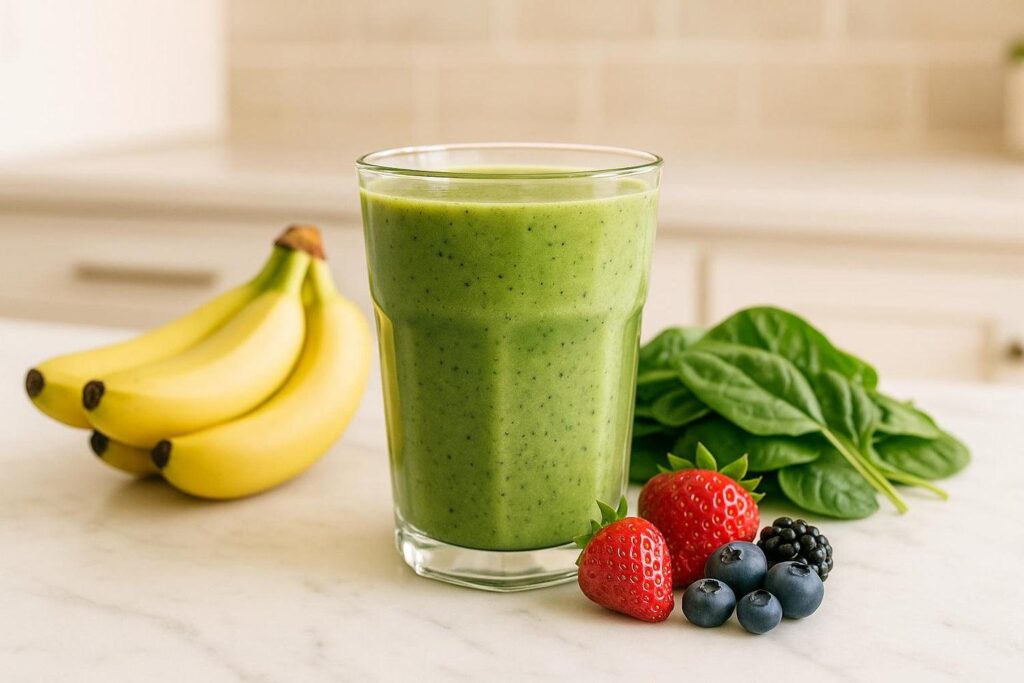
Smoothies may be suitable for some people receiving dialysis, but they need to be considered within the patient’s potassium, fluid, phosphorus, and protein requirements. Dietary recommendations differ according to the dialysis method and individual laboratory results.
Hemodialysis and Potassium Intake
In people receiving hemodialysis, potassium may build up between treatment sessions.
This can make potassium management especially important.
A smoothie containing several potassium-rich ingredients may exceed an individual’s planned intake.
A renal dietitian can help evaluate ingredients, portions, and the timing of meals.
Peritoneal Dialysis and Different Nutritional Needs
People receiving peritoneal dialysis may have different potassium requirements.
Some patients may need more dietary potassium rather than less, depending on laboratory results and treatment.
Protein needs may also differ.
It is therefore incorrect to recommend one fixed smoothie recipe for every dialysis patient.
Do Smoothies Count Toward Fluid Restrictions?
Yes. If you have been given a fluid limit, the drink’s liquid volume generally counts toward that allowance.
Some dialysis patients must carefully manage fluids to avoid excessive weight gain, swelling, or breathing problems between treatments.
Other patients with earlier-stage CKD may not require a fluid restriction.
Do not deliberately reduce fluid intake without medical advice, especially in Qatar’s hot climate, where fluid losses and hydration needs also require consideration.
The NIDDK’s hemodialysis nutrition guidance explains why potassium and fluid intake need individualized planning.
What About Phosphorus in Smoothies?
Phosphorus in smoothies can come from dairy products, protein supplements, nuts, seeds, and food additives. People with reduced kidney function may need phosphorus management if their blood levels are elevated.
Phosphorus supports bones and other body functions.
However, when the kidneys cannot remove enough phosphorus, excessive levels may contribute to bone and cardiovascular complications.
Dairy Products and Phosphorus
Milk and yoghurt contribute protein, calcium, and phosphorus.
These foods can be useful parts of a balanced diet, but the quantities may need adjustment for people with CKD.
A patient requiring more protein may receive different recommendations from someone whose protein intake needs moderation.
Protein Powders and Smoothie Supplements
Protein powders are popular ingredients in fitness and meal-replacement smoothies.
However, their protein and mineral content varies.
Some products also contain phosphorus additives or added potassium.
If you have kidney disease, avoid starting high-protein supplementation without discussing your individual nutritional requirements with your healthcare team.
Why Should You Check Food Labels?
Phosphorus additives can be found in some packaged and processed foods.
When checking ingredient lists, look for words containing “phos”, such as phosphate or phosphoric acid.
The body generally absorbs added inorganic phosphorus more readily than some naturally occurring phosphorus in plant foods.
This is one reason label reading matters in kidney nutrition.
Are Green Smoothies Better Than Green Juices for Kidney Patients?
Blended smoothies usually retain more of the original fruit and vegetable fiber than juices made by removing pulp. However, both can contain considerable potassium depending on their ingredients and serving sizes.
Fiber supports digestive health and may help with fullness.
But the presence of fiber does not remove the need to consider potassium, phosphorus, carbohydrates, or fluid intake.
A green smoothie containing whole blended spinach and banana is not automatically lower in potassium than a juice.
Similarly, a fruit juice marketed as natural is not necessarily suitable for someone with diabetes or kidney-related dietary restrictions.
Patients should evaluate the actual ingredients instead of relying on product labels such as detox, cleanse, or superfood.
There is also no reliable evidence that drinking green smoothies can detoxify damaged kidneys or reverse chronic kidney disease.
Is Starfruit Safe for People With Kidney Disease?
No. People with kidney disease should avoid starfruit because it contains a toxin that can cause serious neurological complications when kidney function is impaired.
Starfruit, also called carambola, is sometimes used in fresh juices and tropical smoothies.
The National Kidney Foundation warns that people with kidney disease can develop serious symptoms after consuming it.
Possible symptoms include:
- Persistent hiccups
- Confusion
- Vomiting
- Seizures
If a person with kidney disease consumes starfruit, they should seek prompt medical advice, even if they initially feel well. New neurological symptoms require emergency assessment.
Starfruit should not be used as a smoothie ingredient for people with kidney disease.
Can People With Kidney Disease Drink Green Smoothies Every Day?
Some people with kidney disease may be able to include green smoothies regularly, but daily consumption should depend on their overall diet and medical requirements.
Drinking the same smoothie every day can make it easy to overlook how much potassium or other nutrients are being consumed over time.
This becomes particularly important when a recipe contains multiple concentrated ingredients.
Before making a smoothie a daily habit, consider:
- Are your recent blood potassium and phosphorus results within your prescribed targets?
- Have you been advised to restrict fluids?
- Does the smoothie contain several servings of fruit?
- Are you adding protein powders or supplements?
- Does the drink fit your overall calorie and carbohydrate needs?
For people with CKD and diabetes, even a smoothie made from whole fruit can contain a significant amount of carbohydrate.
A clinical dietitian can help balance these different requirements without recommending unnecessary food restrictions.
Book a Dietetics & Nutrition Consultation
Green smoothies can be a convenient way to include fruits and vegetables in your diet, but not every recipe is suitable for every person with kidney disease.
The relationship between green smoothies and kidney disease depends on several important factors, particularly potassium, phosphorus, fluid intake, and individual nutritional requirements.
The Dietetics & Nutrition Clinic at Turkish Hospital Qatar supports patients who need guidance on medical nutrition, including dietary planning for chronic kidney disease.
Dr. Aysha Saqer is a Clinical Dietitian with experience in therapeutic nutrition, obesity management, and dietary care for chronic medical conditions.
You Can Book Your Appointment by:
 Call: +974 4499 2444
 WhatsApp: +974 5027 0444
 Visit: C Ring Road, Building 325, New Salata 21377, Doha, Qatar
 Book Appointment Online