

Sneezing every morning can be linked to allergens encountered overnight or irritation inside the nose. Bedding, pet allergens, fragrances, and changes in temperature may contribute, but the timing alone cannot identify the cause.
For people living in Doha, Qatar, it is useful to consider bedroom conditions and air-conditioning habits alongside other symptoms. At Turkish Hospital, persistent nasal concerns can be assessed through the ENT department.
This guide explains possible morning sneezing causes, practical bedroom checks, and what to record before an appointment.
Why Am I Sneezing Every Morning After Waking Up?
Sneezing after waking up may reflect exposure to allergens in your sleeping environment. Spending several hours near bedding, upholstered furniture, or a pet can make the bedroom a useful place to investigate.
However, waking up sneezing does not automatically mean you are allergic to your pillow or mattress. The same symptom can occur for different reasons, and more than one trigger may be involved.
Start by noticing the pattern:
- Does sneezing begin while you are still in bed?
- Does it start when you make the bed or open the curtains?
- Does it improve after leaving the room?
- Does it happen when you sleep somewhere else?
- Do you also have itching, watery eyes, or nasal blockage?
These observations are more useful than assuming the cause from one symptom. They give your doctor a clearer picture of when the problem occurs and which exposures may deserve attention.
Could your bedroom be causing your morning sneezing?
Dust mites, animal allergens and mould are the usual bedroom suspects. They only cause symptoms in people who are sensitive to them, so having them in the house doesn’t mean everyone will develop an allergy.
Dust mites in bedding, pillows and mattresses
Dust mites are microscopic and live in household fabrics. In people with a dust mite allergy, they can cause sneezing, a blocked or runny nose, and itchy, watery eyes.
You can’t spot them by looking at your sheets, and a tidy bedroom can still hold plenty of allergen. Before you buy new bedding, note whether your symptoms follow the time you spend in bed. A doctor can tell you whether your history points to an allergy and whether further testing is worth doing.
Pets and soft furnishings
Pet allergy comes from proteins in dander and saliva, not from visible hair. If an animal sleeps on your bed or sits on bedroom furniture, those proteins end up where you spend eight hours a night.
Tell your doctor if pets come into the bedroom, even if you’ve lived with them for years. Mention too whether your symptoms ease when you sleep away from home.
Damp and mould
Mould is another indoor allergen. Damp patches, condensation that keeps coming back, or a musty smell are all reasons to inspect the room and find where the moisture is coming from.
When you take notes, say where you saw the problem and whether it returns. “Dusty” doesn’t tell a doctor much.
Can air conditioning cause sneezing?
Sometimes. Changes in temperature or humidity can irritate the nose, and cooled rooms are a common example. That isn’t the same as being allergic to air conditioning.
If you live in Qatar, a few questions are worth asking. Do symptoms start when you walk into a cool room? Does the air blow straight at your bed? Does anything change when you alter the settings?
Service the unit as the manufacturer recommends. If you notice a leak, a musty smell or damp near the unit, have it inspected rather than hoping a different temperature will fix it.
Don’t reach for a humidifier by default. Extra moisture can help dust mites and mould thrive, so more humidity won’t cure morning nasal symptoms for everyone.
Keep a note of room conditions alongside your symptoms. A repeated pattern is useful in an assessment, but it doesn’t prove the air conditioner is the only cause.
Could it be non-allergic rhinitis?
Non-allergic rhinitis gives you nasal symptoms without an allergic reaction behind them. Triggers include shifts in temperature or humidity, smoke, perfume and other irritating fumes.
This matters if your sneezing starts after a room spray, perfume, scented cleaner or incense. Write those down, even if earlier allergy tests were negative.
Bring a list of your nasal sprays and other medicines to the appointment. Some medicines can contribute to nasal problems, and so can long-term use of decongestant sprays. Don’t stop anything your doctor prescribed without talking to them first.
Bedroom checks that can reduce morning sneezing
Cutting down the right exposure can help, but only if it matches your actual trigger. Start with a few easy changes and keep notes, rather than buying six products at once.
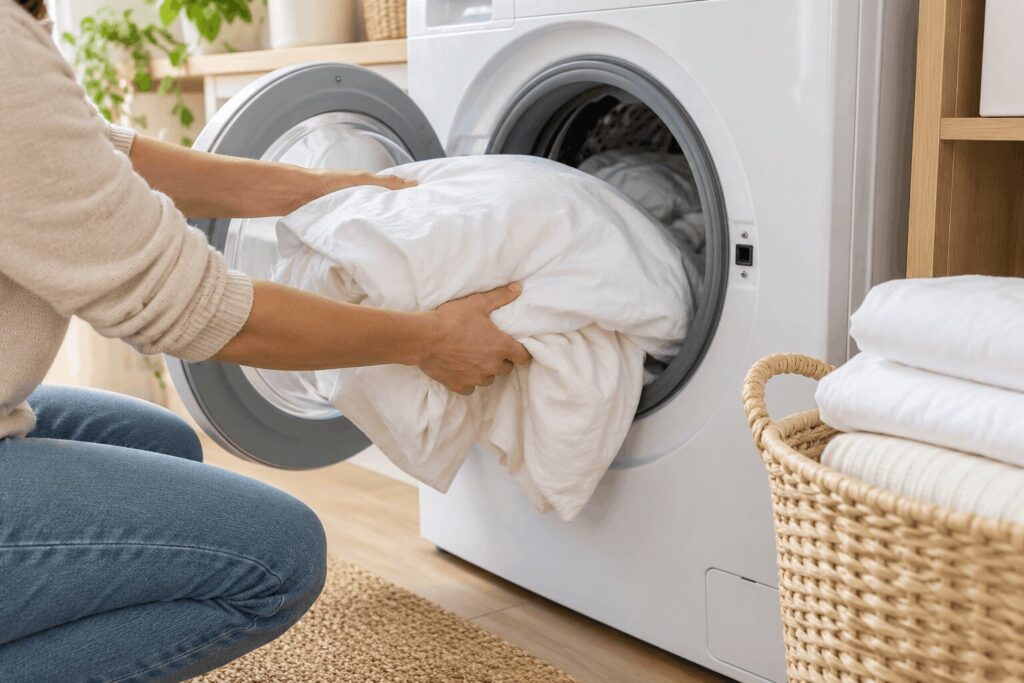
Bedding. Wash bedding regularly and follow the care labels. If dust mites are part of the picture, allergen-proof mattress and pillow covers can be one part of the plan. Mayo Clinic recommends hot-washing washable bedding weekly to control dust mites, so check that the temperature suits your fabric.
Dust. Dust with a damp cloth so you aren’t just flinging it into the air. A vacuum with good filtration also helps. Cleaning can stir up allergens for a while, though, so if it reliably sets off your symptoms, ask someone else to do the bedroom if you can, and raise it with your doctor.
Pets. If you suspect or have confirmed a pet allergy, keeping animals out of the bedroom is a sensible step. Don’t judge it after one night. Talk through the wider plan with your doctor.
Damp. Fix the leak or the condensation instead of wiping the same patch again and again.
Fragranced products. List the room sprays, incense, perfumes and cleaning products you use near bedtime, and note whether symptoms follow. If you can drop an optional one, see whether anything changes. You don’t need to expose yourself to a suspected trigger on purpose. Bring your observations to the appointment.
Symptom relief. A pharmacist or doctor can tell you whether saline spray or another treatment suits you. Don’t use a decongestant spray for longer than the instructions say, because overuse can make blockage worse. If you use a nasal-rinsing device, follow its instructions and use distilled, sterile, or boiled-and-cooled water. Never use plain tap water.
What to record before an ENT appointment
A symptom diary lets you describe your mornings clearly. It isn’t an allergy test, just a record of what you noticed. Try it over several mornings, unless your symptoms need medical attention sooner.
What to record | Example entry |
When symptoms started | Before getting out of bed |
Symptoms | Sneezing, watery nose, itchy eyes |
How long they lasted | Until after breakfast |
Bedroom observations | Dog slept in room; used fragrance at bedtime |
Other places | Fewer symptoms when staying elsewhere |
Medicines or sprays | Product name and time used |
Changes you made | Washed bedding; stopped room spray |
Effect on your day | Broken sleep; late getting ready |
Write down what happened, not what you think caused it. “Sneezing started after making the bed” helps more than “I definitely have a dust allergy.”
Bring any earlier test results and the treatments you’ve tried. If something didn’t work, say how you used it and for how long.
Visit Turkish Hospital Qatar
If you sneeze most mornings and it keeps affecting your comfort, sleep or routine, it’s worth getting checked. A careful history and the right assessment can replace guesswork about your bedroom.
You can book an appointment with Dr. Alaa Al Modallal or Dr. Akif Rafi Rafiullah Khan at Turkish Hospital Qatar, subject to availability.
You Can Book Your Appointment by:
 Call: +974 4499 2444
 WhatsApp: +974 5027 0444
 Visit: C Ring Road, Building 325, New Salata 21377, Doha, Qatar
 Book Appointment Online