
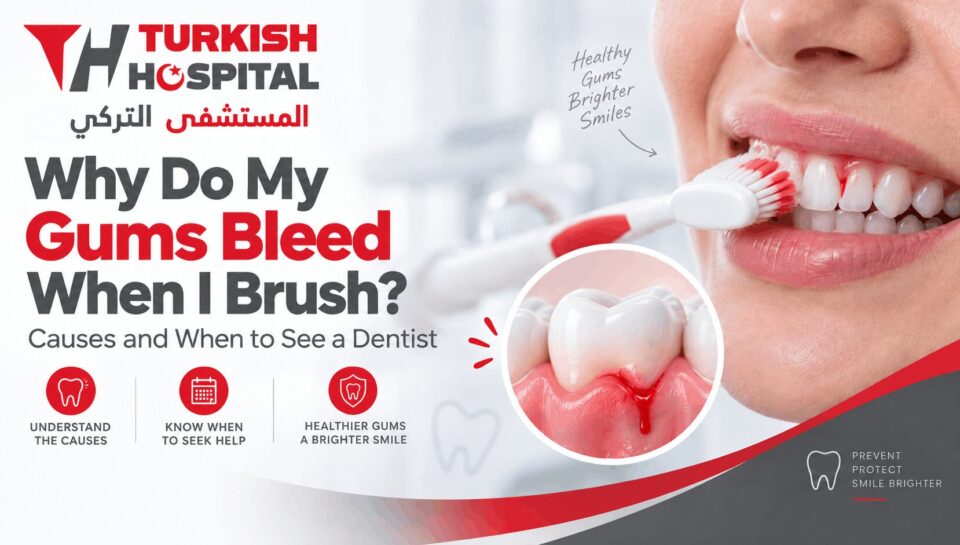
Why Do My Gums Bleed When I Brush? Causes and When to See a Dentist
Noticing blood on your toothbrush or in the sink can be worrying. Gums bleeding when brushing are commonly associated with inflammation around the gumline, particularly gingivitis, the early stage of gum disease. Plaque buildup is a frequent cause, although brushing too forcefully, pregnancy-related hormonal changes, certain medicines and some less-common health problems may also contribute.
An occasional small amount of bleeding does not tell you exactly what is wrong. However, gums that bleed repeatedly should not simply be ignored. A dentist can examine the gums and teeth and determine whether the problem is related to brushing technique, plaque, tartar, gum disease or another cause.
Why Do My Gums Bleed When I Brush?
The most common explanation is inflammation caused by dental plaque.
Plaque is a sticky bacterial film that continually forms on the teeth. When it remains around the gumline or between teeth, it can irritate the surrounding tissue. The gums may then become swollen, tender and more likely to bleed during brushing or flossing. This early inflammatory condition is called gingivitis.
Importantly, bleeding does not necessarily mean that you have advanced gum disease. A dental examination is needed to identify the cause and severity.
Common Causes of Bleeding Gums When Brushing
1. Plaque Buildup and Gingivitis
Gingivitis is one of the most common reasons for bleeding around the gumline. It develops when plaque is not removed effectively enough and inflammation develops in the gum tissue.
Other signs may include:
- swollen or tender gums
- redness or a change from your normal gum colour
- bad breath
- bleeding when flossing
- bleeding while eating some harder foods
Gingivitis does not involve the bone loss seen in more advanced periodontal disease and can often improve when plaque is effectively controlled and appropriate dental care is provided. Untreated gum inflammation, however, can progress to periodontitis, which can damage the tissues and bone supporting the teeth.
2. Brushing Too Hard
Can brushing too hard cause bleeding gums? Yes. Excessive pressure or aggressive scrubbing can irritate gum tissue, particularly when using a toothbrush with firm bristles.
The American Dental Association recommends a soft-bristled toothbrush, gentle pressure and brushing twice daily for about two minutes.
However, do not automatically assume that brushing pressure is the only explanation. If your gums regularly bleed even when you brush gently, inflammation or another dental problem may also be present.
3. Plaque That Has Hardened Into Tartar
Plaque that is not removed can mineralise and become tartar, also called calculus.
Unlike soft plaque, tartar cannot be removed effectively with ordinary brushing or flossing. A dentist or dental hygienist removes it during professional cleaning. Tartar and the plaque that collects around it can contribute to continuing gum inflammation.
This is why simply brushing harder is not the solution when significant tartar is present.
4. Starting or Changing Your Flossing Routine
If your gums bleed when you start cleaning between your teeth, do not automatically conclude that flossing is damaging them. Bleeding can occur when already-inflamed gums are disturbed, although an overly forceful technique can also injure the tissue.
Cleaning between the teeth is important because a toothbrush cannot effectively reach every interdental surface. The ADA notes that interdental cleaning can help remove plaque from these areas.
If you are unsure how to floss or use interdental brushes safely, ask a dentist or dental hygienist to demonstrate the technique.
Other Reasons Your Gums May Bleed
Pregnancy and Hormonal Changes
Hormonal changes during pregnancy can make gum tissue more reactive to plaque and increase the likelihood of inflammation and bleeding.
Qatar’s Primary Health Care Corporation notes that gum inflammation may worsen during pregnancy because of hormonal fluctuations and advises ongoing oral-health monitoring and professional dental cleaning.
Bleeding gums during pregnancy should therefore still be discussed with a dental professional rather than being dismissed as something that simply has to be tolerated.
Medicines That Affect Bleeding
Some anticoagulant or antiplatelet medicines can make bleeding occur more easily. Bleeding gums are a recognised effect of medicines such as some blood-thinning treatments.
Do not stop or alter prescribed blood-thinning medicine because your gums bleed. Discuss the bleeding with your dentist and the clinician who prescribed the medication.
Vitamin Deficiencies and Other Medical Conditions
Less commonly, persistent gum bleeding can be associated with nutritional deficiencies, bleeding disorders or other medical conditions. For example, severe vitamin C deficiency can cause bleeding gums, while vitamin K is important for normal blood clotting.
These possibilities should be considered in context. For most people with bleeding during brushing, it is more useful to have the teeth and gums assessed than to start taking supplements without evidence of a deficiency.
Are Bleeding Gums Normal?
Regular gum bleeding during normal brushing is not considered a sign of healthy gums.
The NHS lists gums that bleed while brushing or flossing among the symptoms of gum disease, while Qatar PHCC advises people to pay attention to gum bleeding as an abnormal oral sign.
That does not mean every small spot of blood represents serious disease. The pattern, frequency, amount of bleeding and other symptoms all matter.
What Can the Pattern of Bleeding Tell You?
The pattern can provide useful clues, although it cannot replace a dental examination.
What you notice | Possible explanation | Sensible next step |
Bleeding mainly after forceful brushing | Local gum irritation may be contributing | Switch to gentle pressure and a soft-bristled brush; seek assessment if it continues |
Bleeding along several areas of the gumline | Plaque-related inflammation or gingivitis may be present | Improve plaque control and arrange a dental check if bleeding persists |
Bleeding when brushing and flossing | Inflamed gum tissue may be affecting areas around and between teeth | Continue gentle oral hygiene and consider professional assessment |
Swollen, tender gums with bleeding | Gingivitis or another inflammatory dental problem may be present | Arrange a dental examination |
Receding gums, persistent bad breath or loose teeth | More advanced periodontal disease needs to be considered | See a dentist for assessment |
Gums bleed without brushing or minor contact | Dental or medical causes may require investigation | Arrange professional assessment, particularly if recurrent |
Heavy bleeding that is difficult to stop or bleeding elsewhere as well | A problem beyond routine gum irritation may need consideration | Seek prompt medical advice |
Periodontal disease can cause red or swollen gums, easy bleeding, gum recession, persistent bad breath, discomfort when chewing and, in advanced cases, loose teeth.
How to Stop Gums Bleeding When Brushing
The right approach depends on the cause. If plaque-related inflammation is responsible, reducing plaque consistently is more helpful than avoiding the bleeding area.
Brush Gently Twice a Day
Use a soft-bristled toothbrush with fluoride toothpaste and clean all tooth surfaces using gentle pressure.
Qatar PHCC recommends brushing twice daily with a soft-bristle toothbrush and fluoride toothpaste and avoiding brushing too hard.
Do not scrub the gumline aggressively in an attempt to make it cleaner.
Clean Between Your Teeth
Daily interdental cleaning helps remove plaque from areas that toothbrush bristles may not reach effectively.
Depending on the spaces between your teeth and your individual needs, your dentist may recommend floss, interdental brushes or another cleaning aid.
Do Not Stop Cleaning Because You See Blood
If plaque-related gingivitis is contributing to the problem, abandoning brushing and interdental cleaning can allow more plaque to accumulate.
Continue cleaning gently rather than avoiding the gums altogether, unless your dentist gives you different instructions for a specific injury or procedure.
Arrange Professional Cleaning When Needed
Once plaque has hardened into tartar, normal brushing cannot remove it. Professional cleaning may therefore be needed as part of managing inflamed gums.
Turkish Hospital’s Dental Clinic in Doha lists oral examinations, preventive dental care and cleaning among its dental services.
Avoid Tobacco
Tobacco use is an important risk factor for gum disease and can interfere with periodontal health and healing.
If you use tobacco, stopping can benefit both oral and overall health.
Can Tartar Cause Bleeding Gums?
Tartar can contribute to the conditions that make gums bleed.
Plaque that remains on the teeth can harden into tartar. Its rough surface can make effective home plaque control more difficult, while bacteria around plaque and tartar can continue to stimulate gum inflammation.
Because tartar cannot be removed with an ordinary toothbrush, professional cleaning may be necessary.
Gingivitis vs Periodontitis: What Is the Difference?
Gingivitis is inflammation limited to the gums and is the earlier, milder stage of gum disease.
Periodontitis is more advanced disease in which inflammation affects the structures supporting the teeth, including the periodontal tissues and bone. Over time, gums can pull away from the teeth, supportive tissue can be damaged, and teeth may loosen.
Bleeding alone cannot tell you which stage is present. A dental examination is needed.
When Should You See a Dentist for Bleeding Gums?
Consider arranging a dental assessment if:
- your gums bleed repeatedly when brushing or flossing
- your gums are swollen, painful or persistently tender
- you have continuing bad breath or an unpleasant taste
- your gums appear to be receding
- you notice pus around a tooth or the gums
- a tooth feels loose
- the bleeding happens without brushing or another obvious trigger
- the problem continues despite careful oral hygiene
The NHS advises dental assessment for bleeding, swollen or painful gums, while the National Institute of Dental and Craniofacial Research identifies bleeding, recession, bad breath and loose teeth among signs associated with periodontal disease.
Seek prompt medical attention if bleeding is heavy or difficult to stop, or if gum bleeding occurs together with significant unexplained bruising, bleeding from other areas or other concerning symptoms.
What Will a Dentist Check?
A dentist will usually begin by asking about your symptoms, oral-hygiene routine, medical conditions and medicines.
The dental examination may include checking for:
- plaque and tartar
- gum inflammation
- areas that bleed
- gum recession
- the spaces between the gums and teeth
- loose or shifting teeth
- other dental or oral problems
Depending on the findings, X-rays or further periodontal assessment may be needed.
Treatment depends on what is causing the bleeding. It may involve improving brushing and interdental-cleaning technique, professional cleaning, treating gum disease or investigating another underlying problem.
How Can You Prevent Bleeding Gums?
Good plaque control is central to maintaining gum health.
For most adults, useful habits include brushing twice a day with fluoride toothpaste, using a soft-bristled toothbrush, cleaning between the teeth daily and attending dental check-ups at intervals appropriate to individual oral-health needs.
You should also tell your dentist about relevant medical conditions and all medicines you take.
Final Thoughts
Gums bleeding when brushing are often associated with plaque-related gum inflammation, but the symptom can have several causes. Brushing too hard, tartar, pregnancy-related hormonal changes and medicines that affect bleeding can also play a role.
The most useful response is not to ignore the bleeding or stop cleaning your teeth. Brush gently, clean between your teeth regularly and arrange a dental assessment if the bleeding is recurring, persistent or accompanied by swelling, recession, bad breath or loose teeth.
If you are concerned about persistent bleeding gums, you can request an appointment with Turkish Hospital for an individual dental assessment.
You Can Book Your Appointment by:
📞 Call: +974 4499 2444
💬 WhatsApp: +974 5027 0444
📍 Visit: C Ring Road, Building 325, New Salata 21377, Doha, Qatar
🔗 Book Appointment Online
Frequently Asked Questions
Why do my gums bleed every time I brush?
Why are my gums bleeding but not painful?
Should I stop brushing if my gums bleed?
Can brushing too hard cause bleeding gums?
If bleeding continues after your brushing technique improves, another cause such as gingivitis should be considered.